II
Six months in my head.
I didn't build right away. I thought. Weeks. Months. Kept coming back, kept thinking, kept looking for solutions.
He showed me reference images 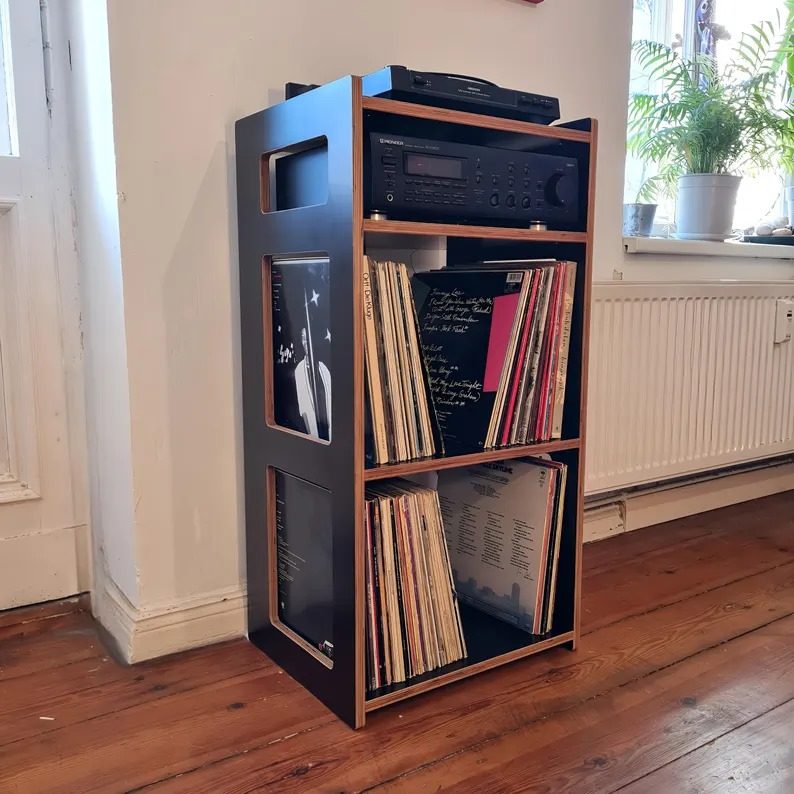
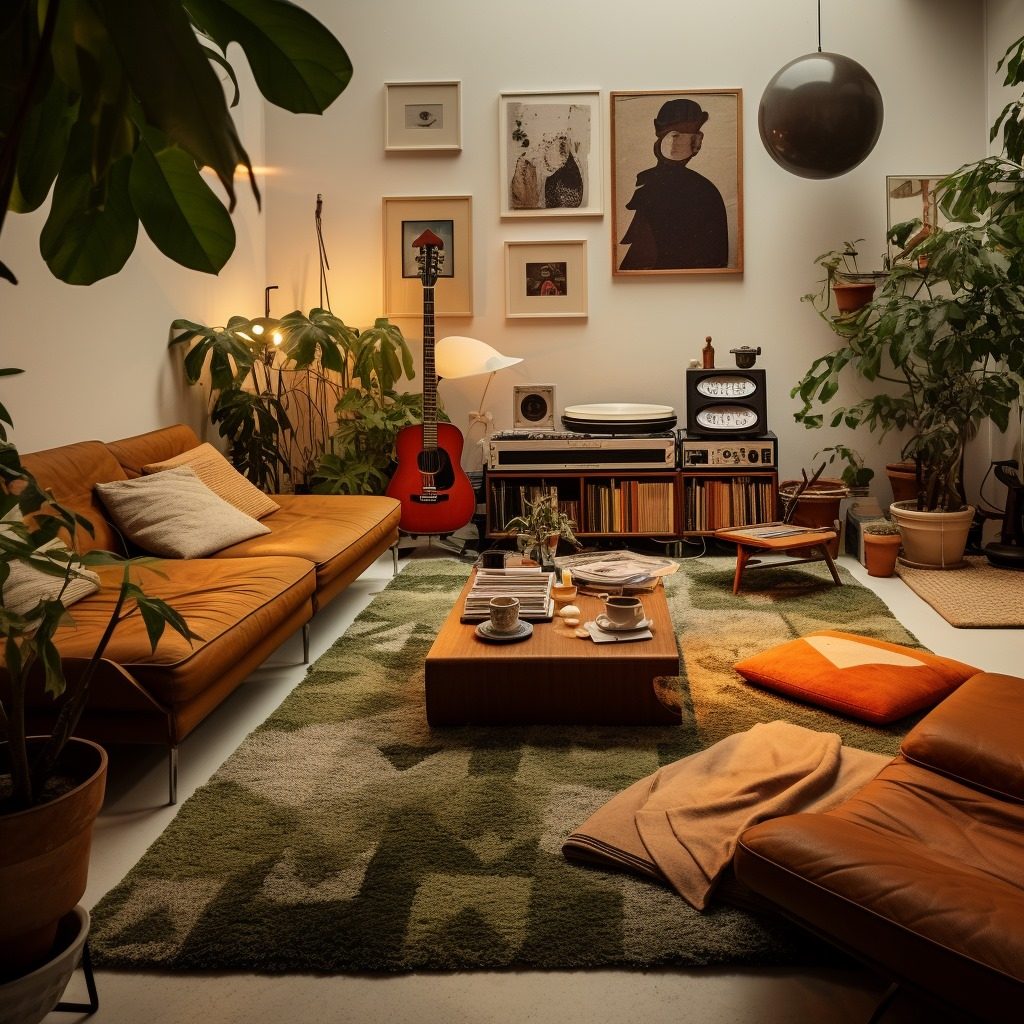
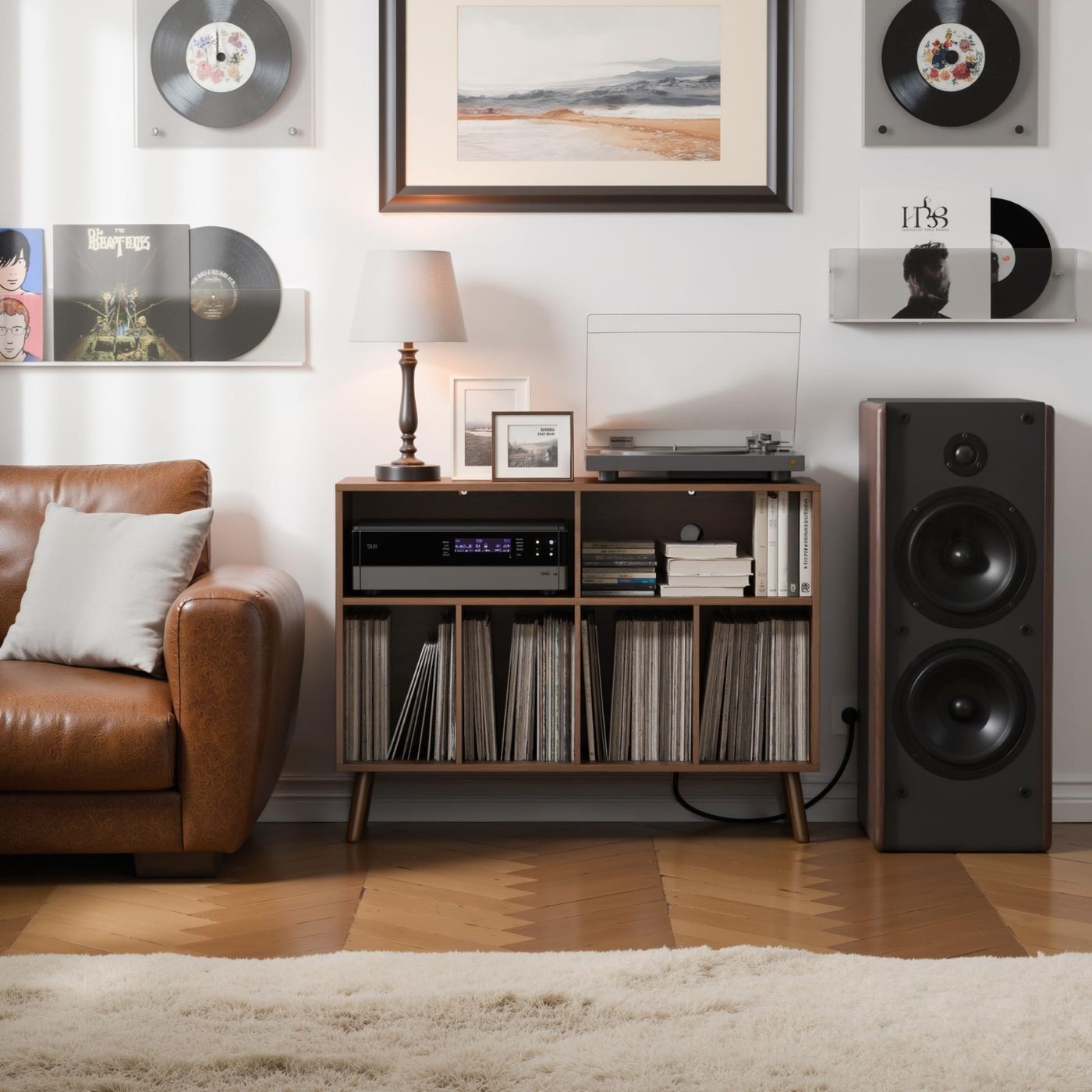
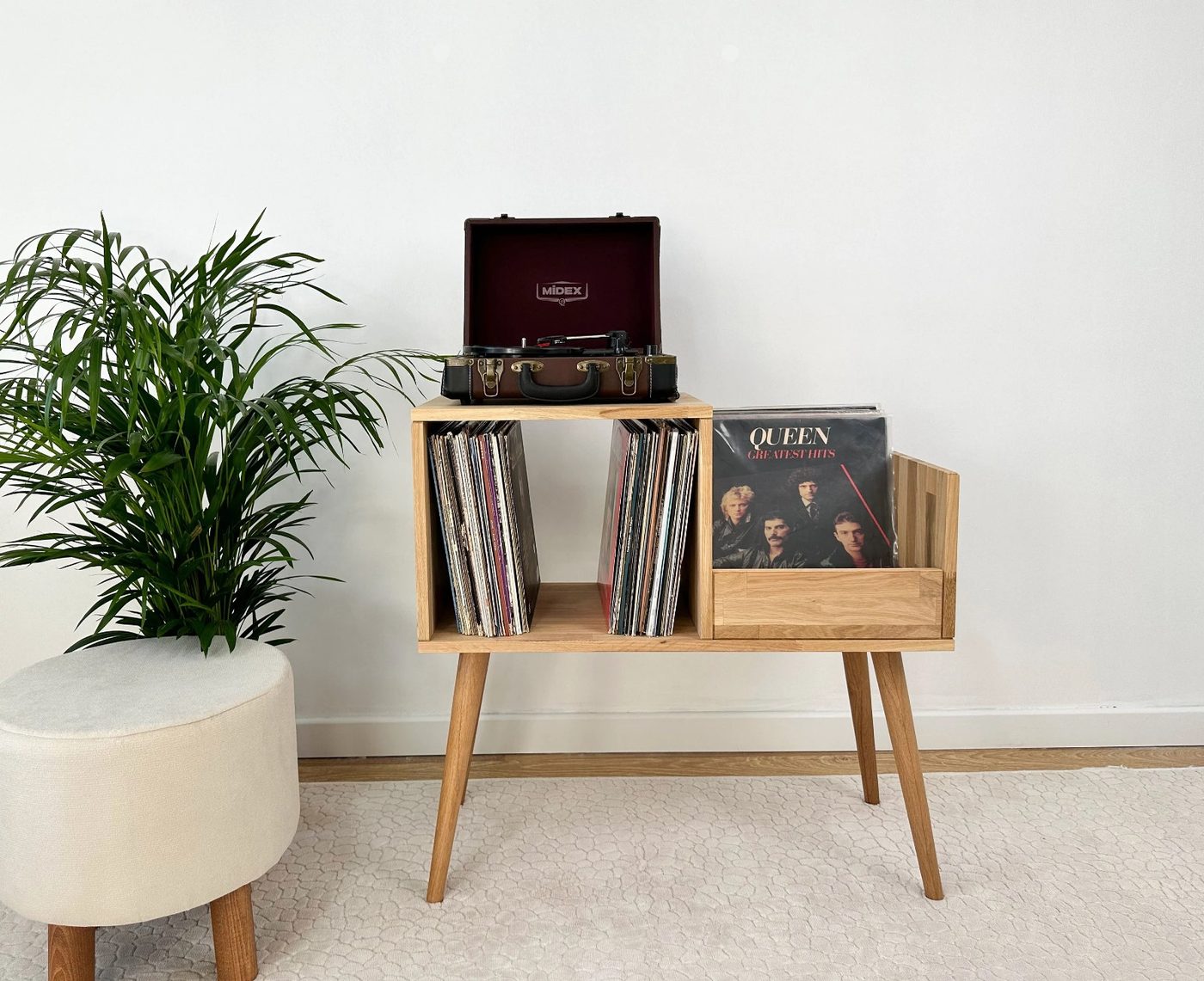 . Warm and cozy. Minimalist. Industrial. At first glance contradictory. At second glance not — the common principle behind them: Japanese listening room aesthetics. Material that's real. Forms that have a reason. Calm without boredom.
He never put it that way. He doesn't have to. That's what I'm for.
And then the technical problems. The wheel system, for example. He likes to rearrange — with 30 to 40 kilos of records in the drawer, that becomes an operation. So the furniture needs wheels. But which ones?
Hydraulic system — too expensive.
Folding system — gives a jolt when it jams. Not good.
Standard casters — then the furniture rolls uncontrolled.
Fixed casters with brakes — didn't exist in the quality I wanted.
Many ideas tested, thought through, researched. Until I found the solution: swivel casters mounted in custom wood blocks 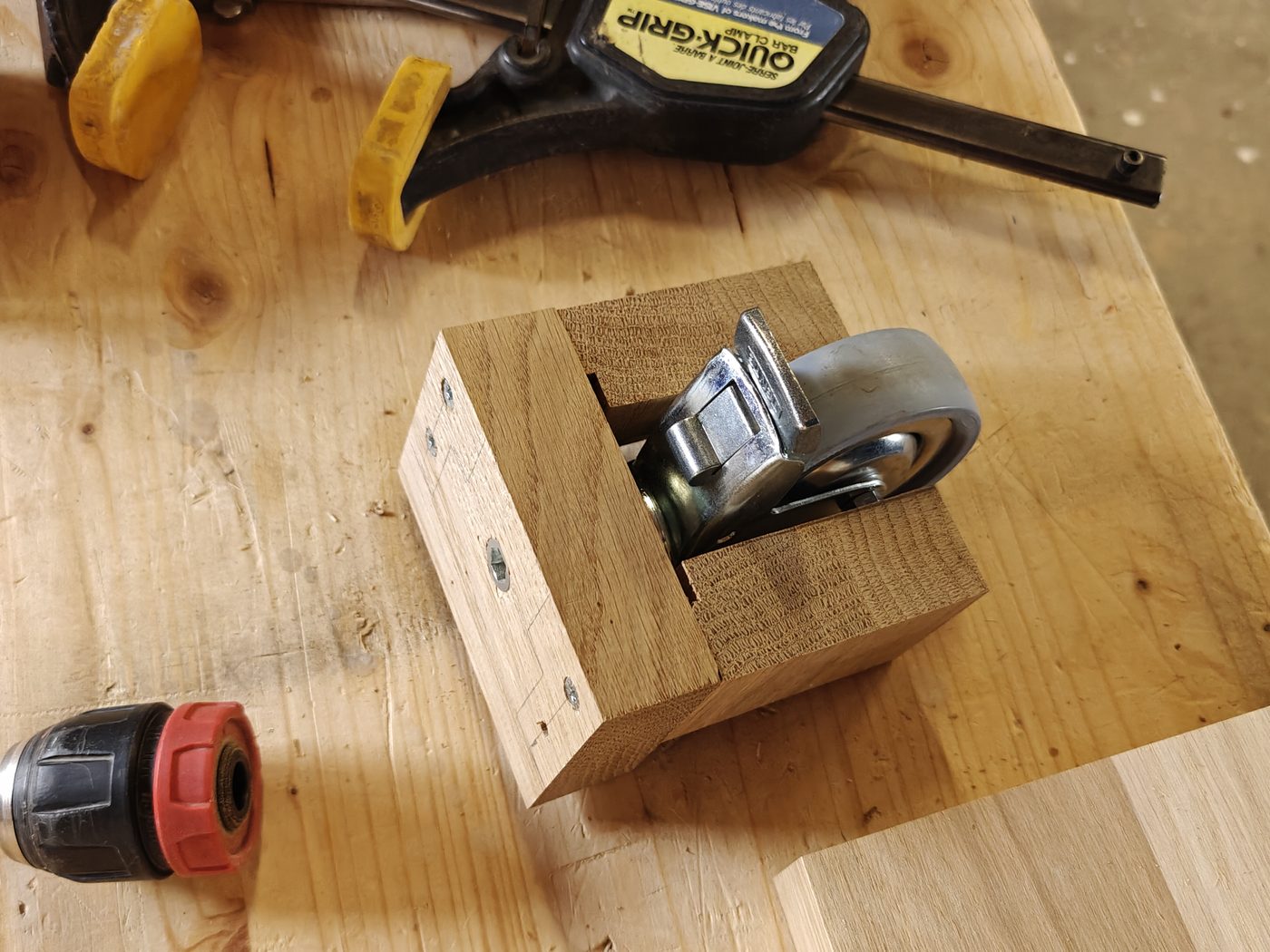
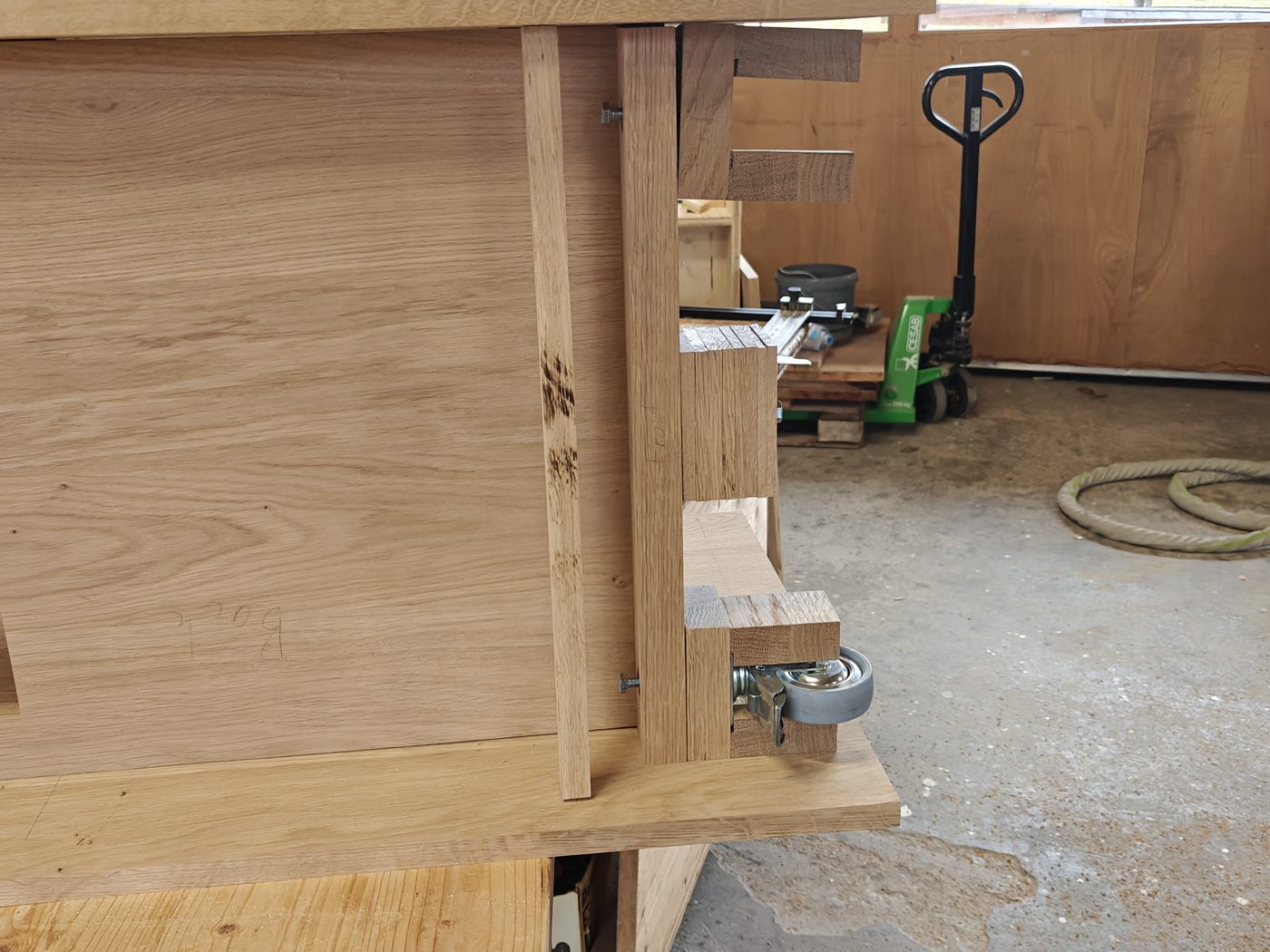
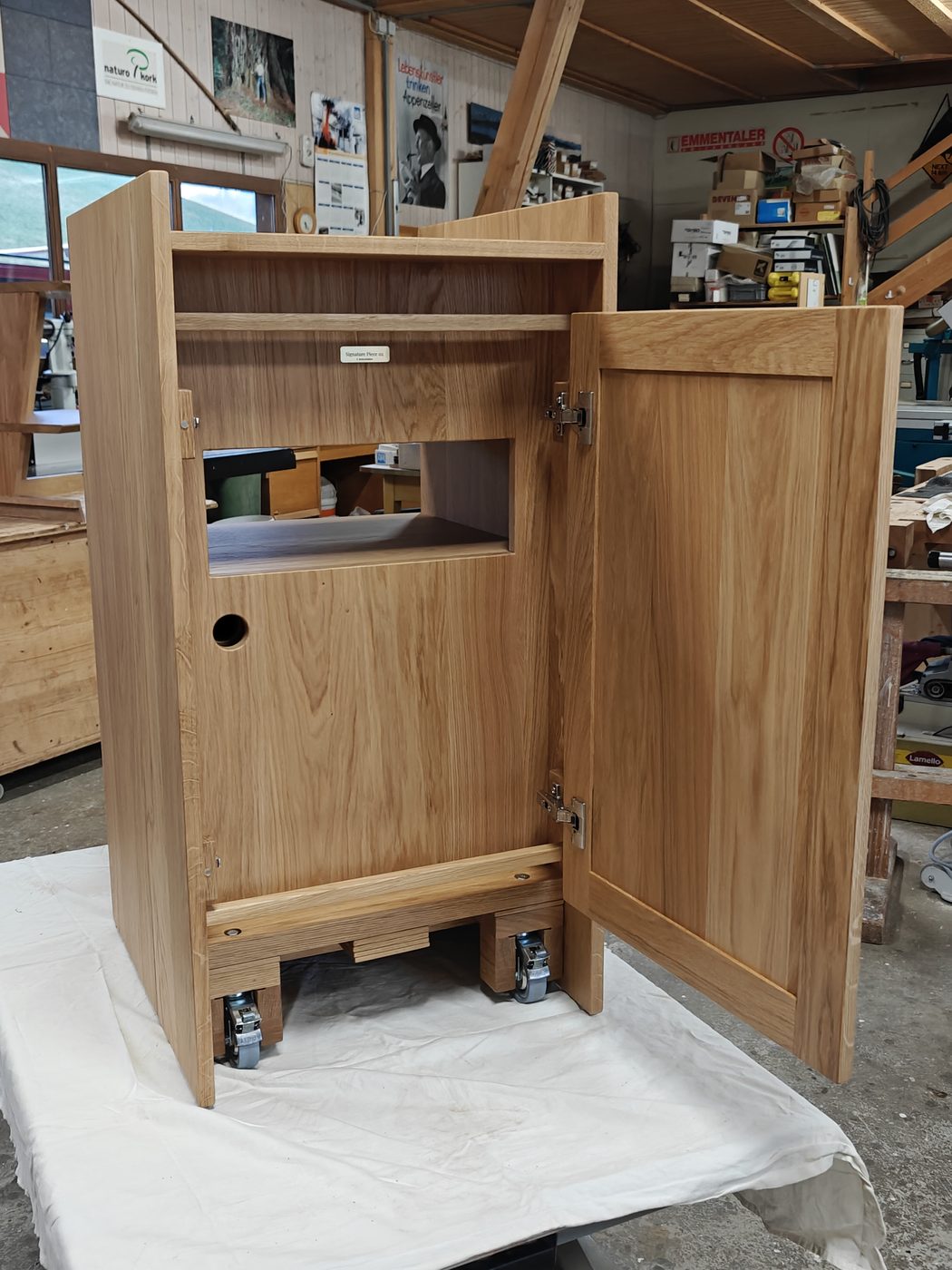 . Swiveling blocked, brake functional. Plus a modular leveling system — shims in various thicknesses, adaptable to floor unevenness, foot material, everything.
Not because you need that every day. But so you can when you want to. Felt pads worn out? Unscrew them. Different foot material, different height? Adjust. Rubber feet instead of felt, 3mm instead of 9mm? No problem. Future-proof.
That's how it went with every detail. 10 A4 sheets 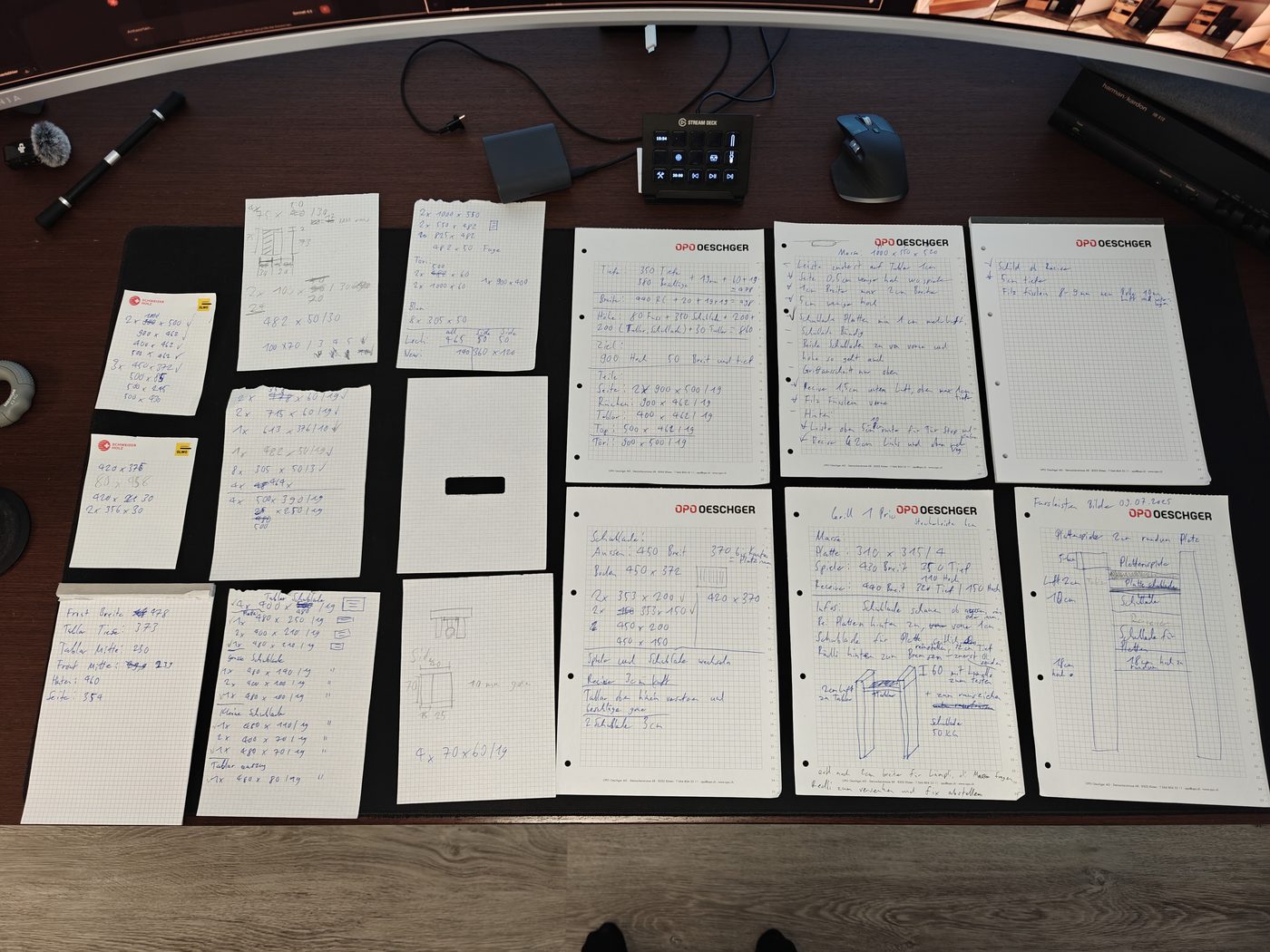 . 4 of them with sketches. Everything else: in my head. No CAD.
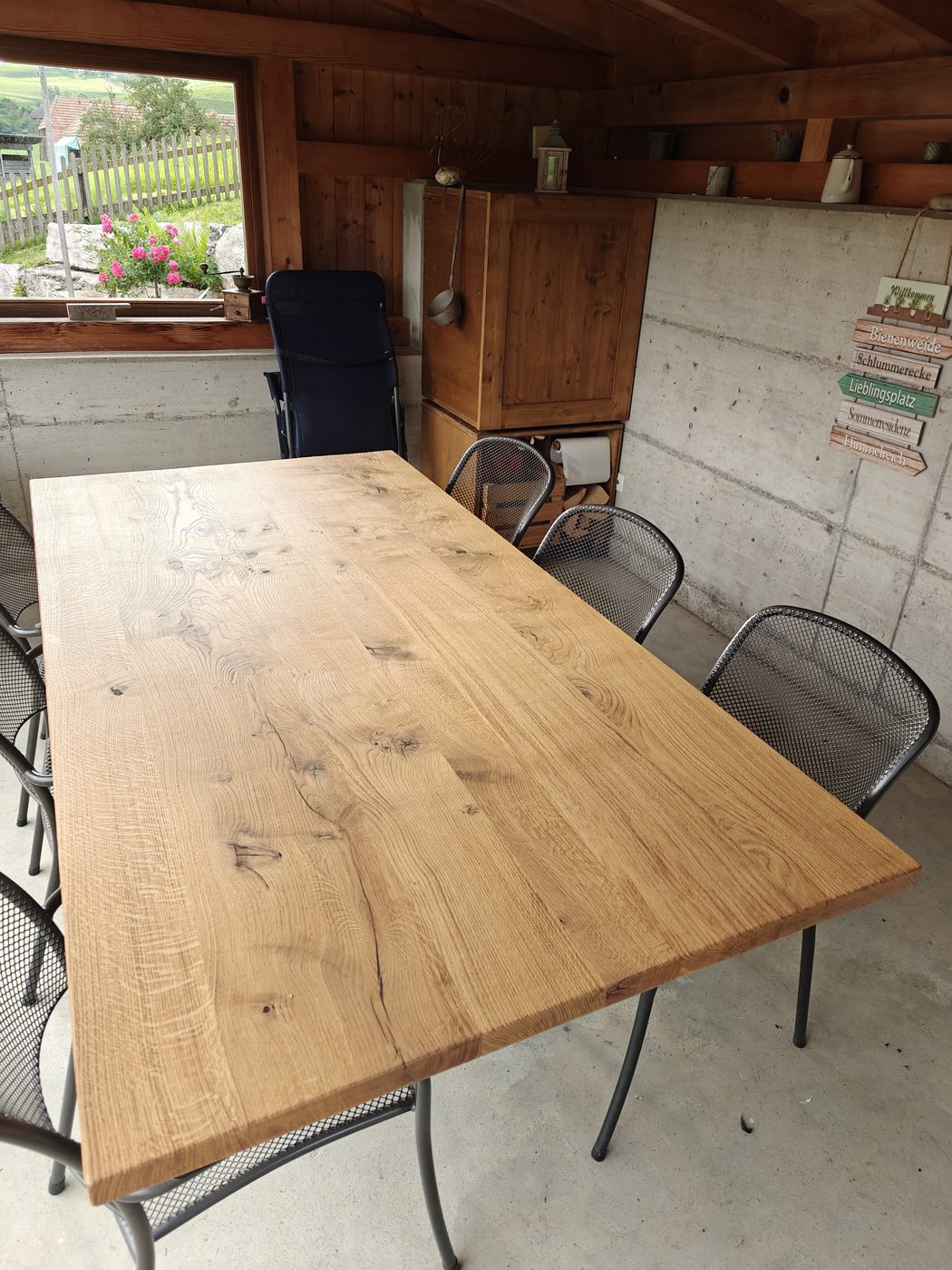 and the two pieces of furniture in the garden house. Simply built pieces, nothing crazy. But solid oak. Honest. At some point the question: "Could you actually make something like that for my turntable?"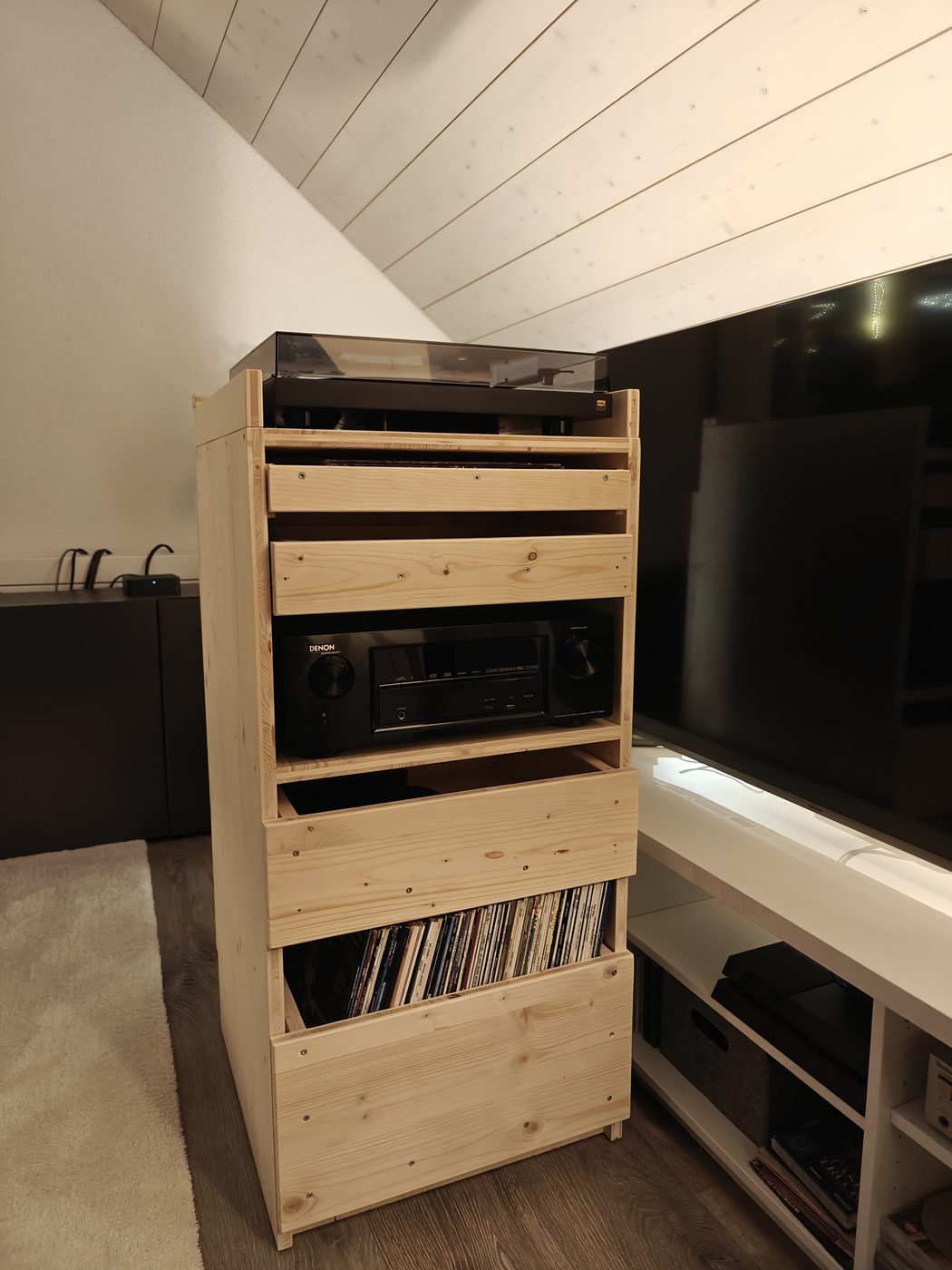
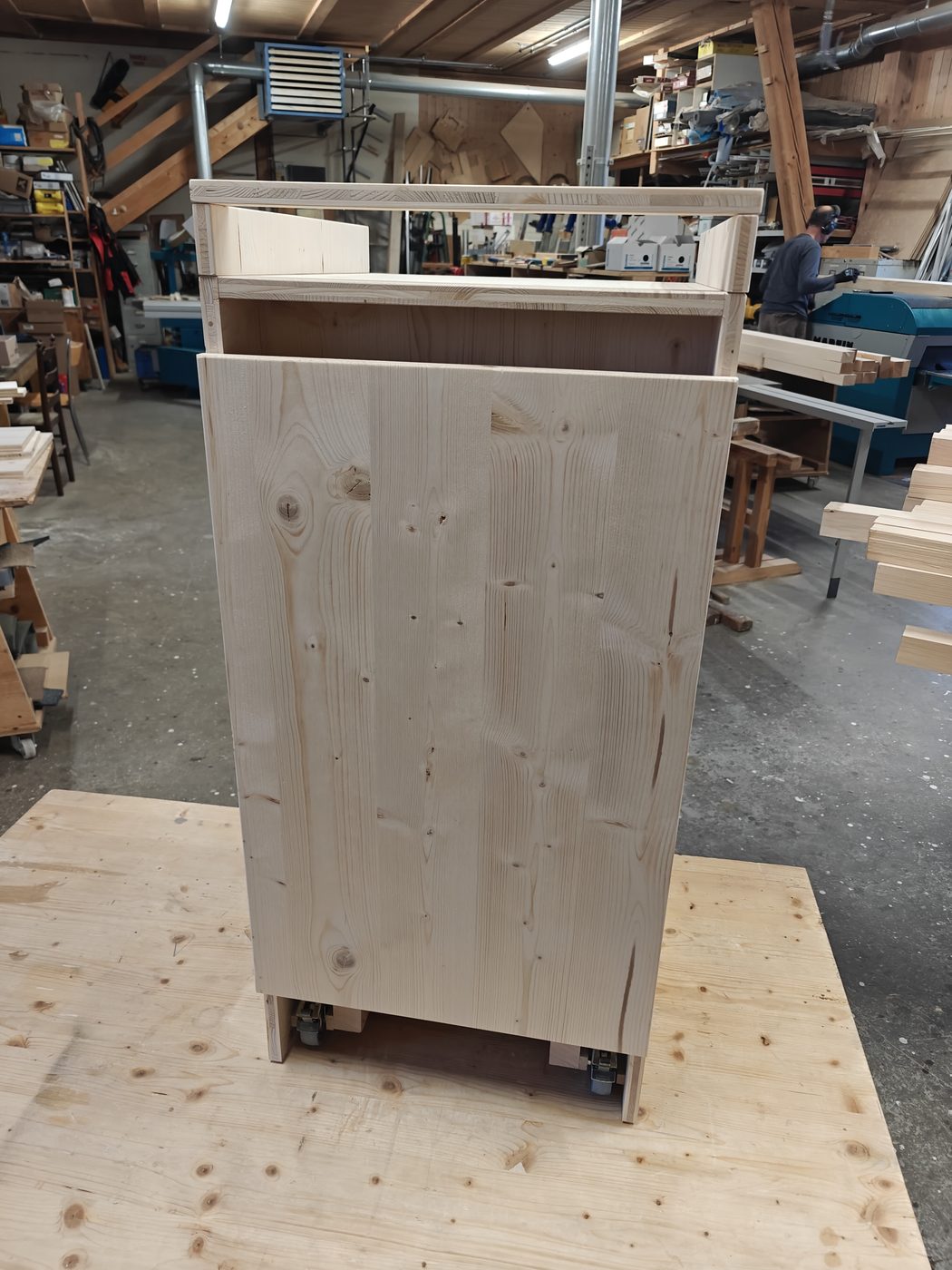
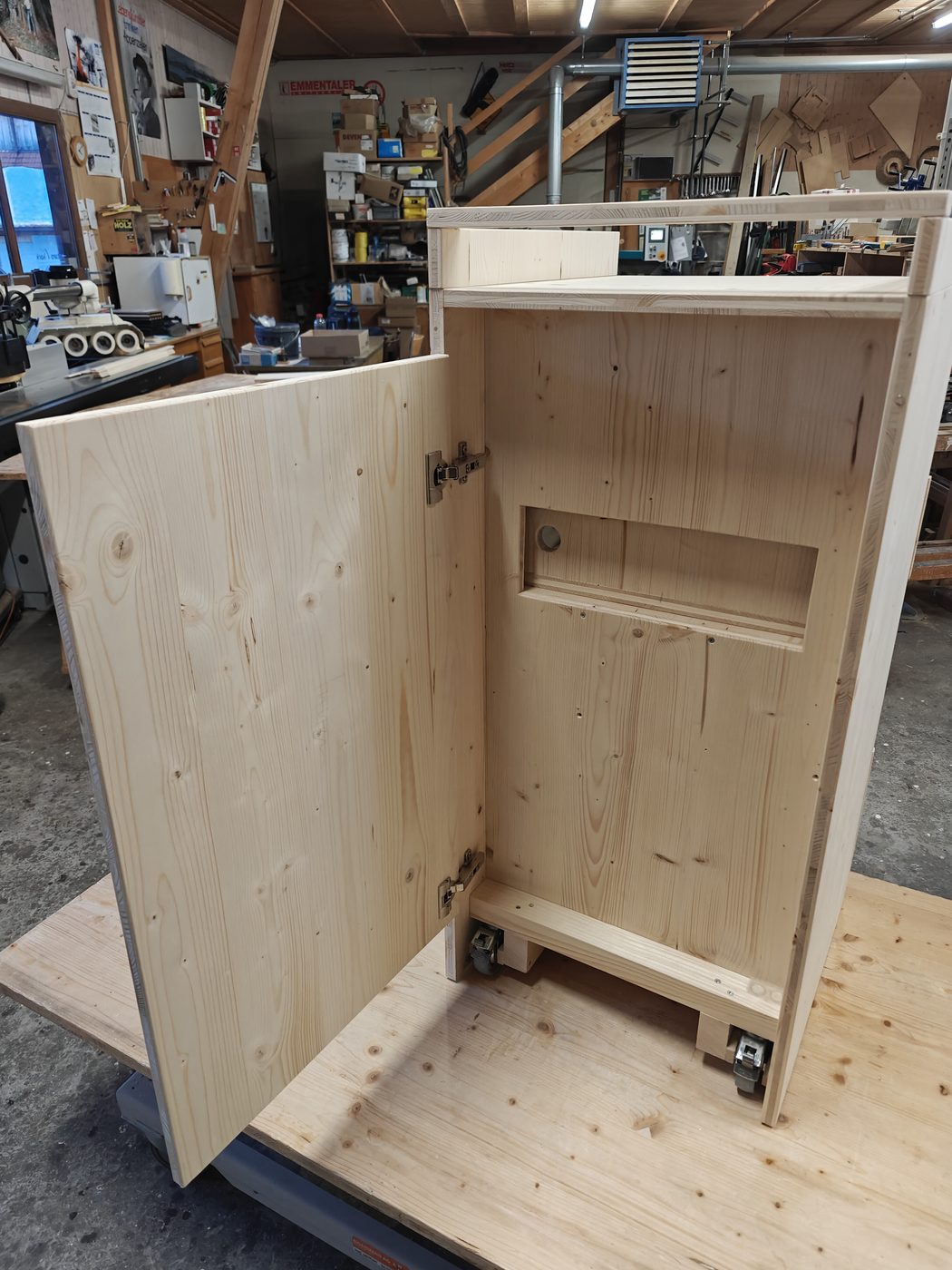
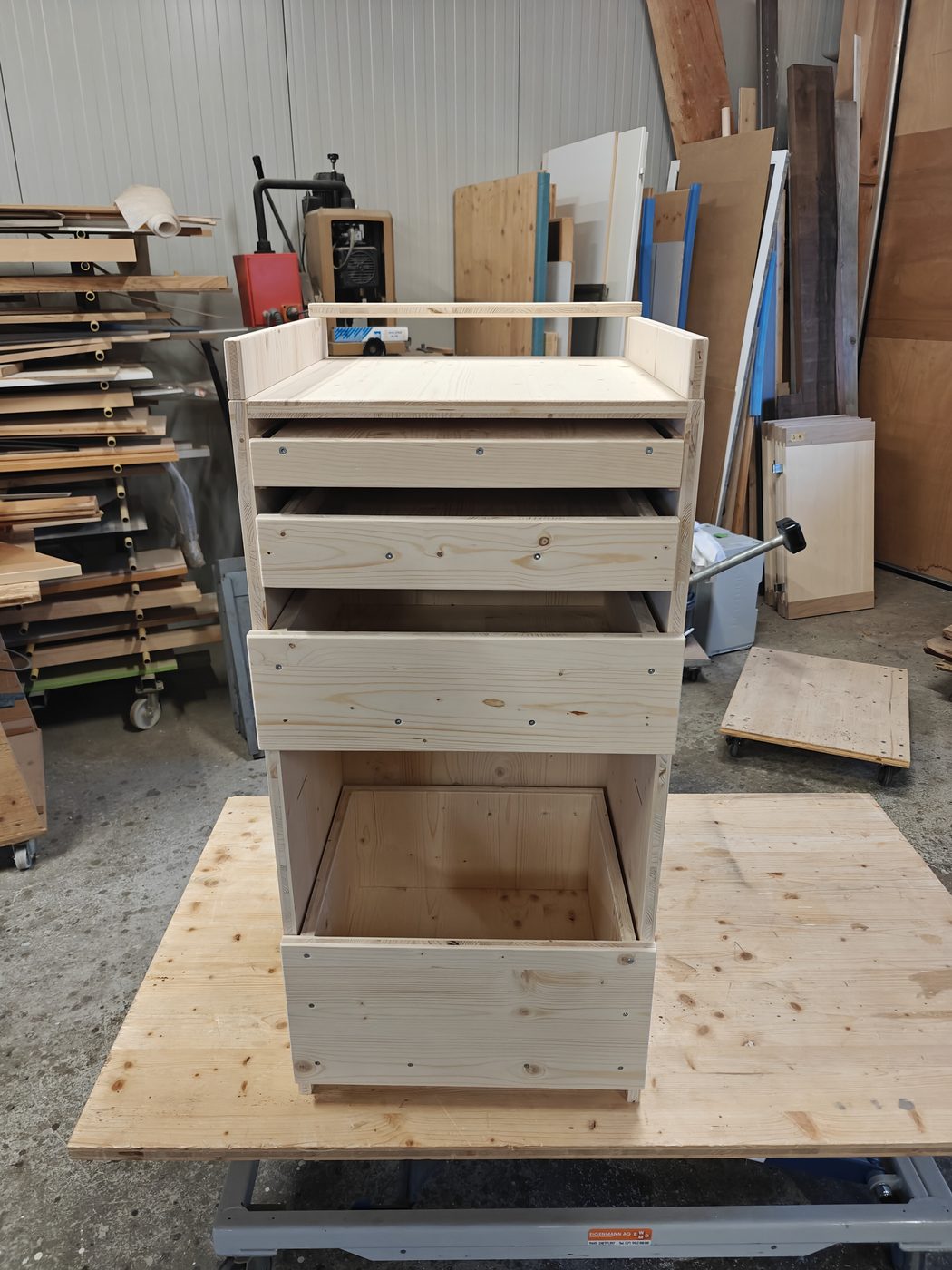 — one large one for the records, a shelf for the receiver, the remaining space divided up, and a shelf on top for the record sleeve.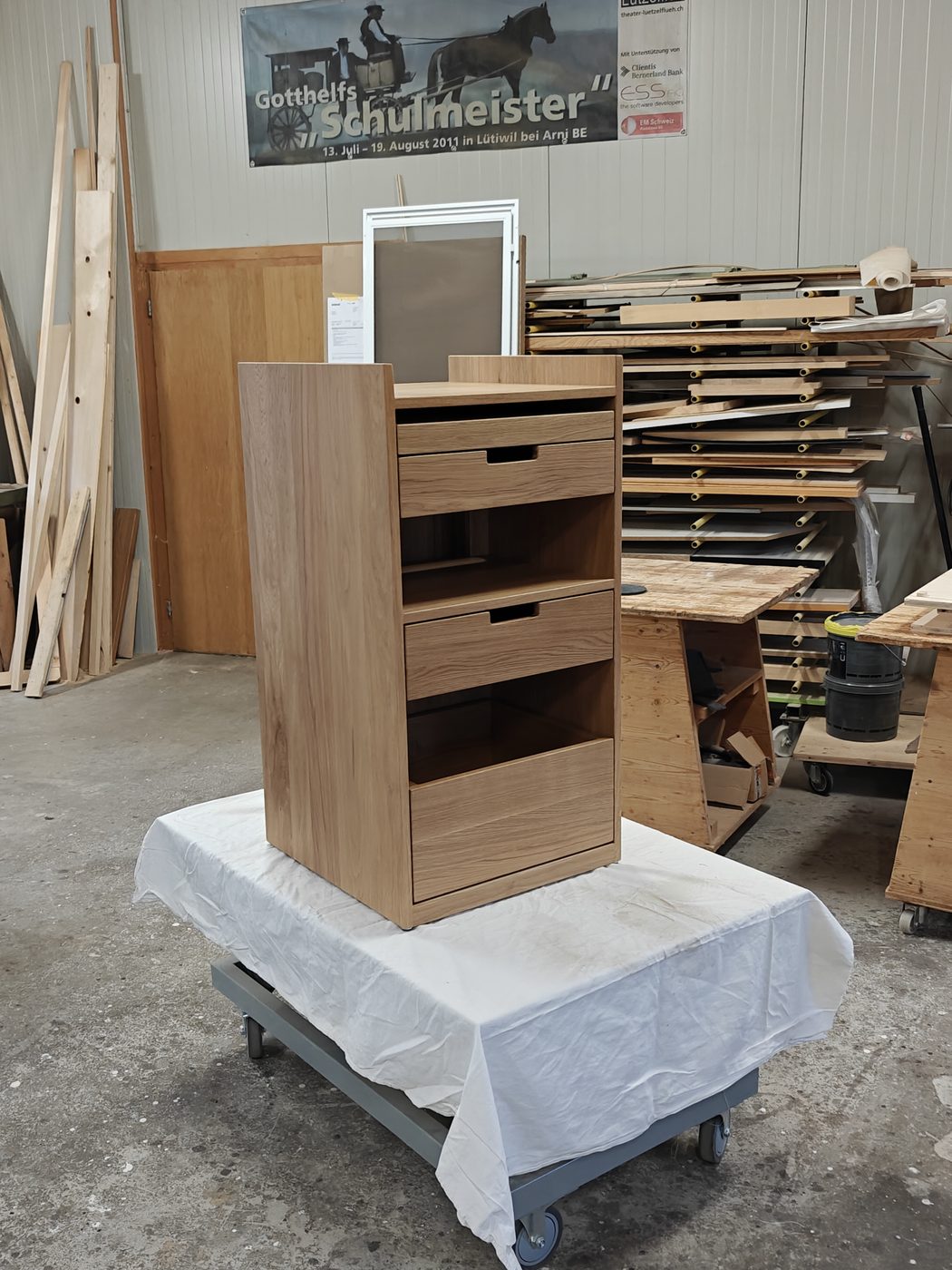
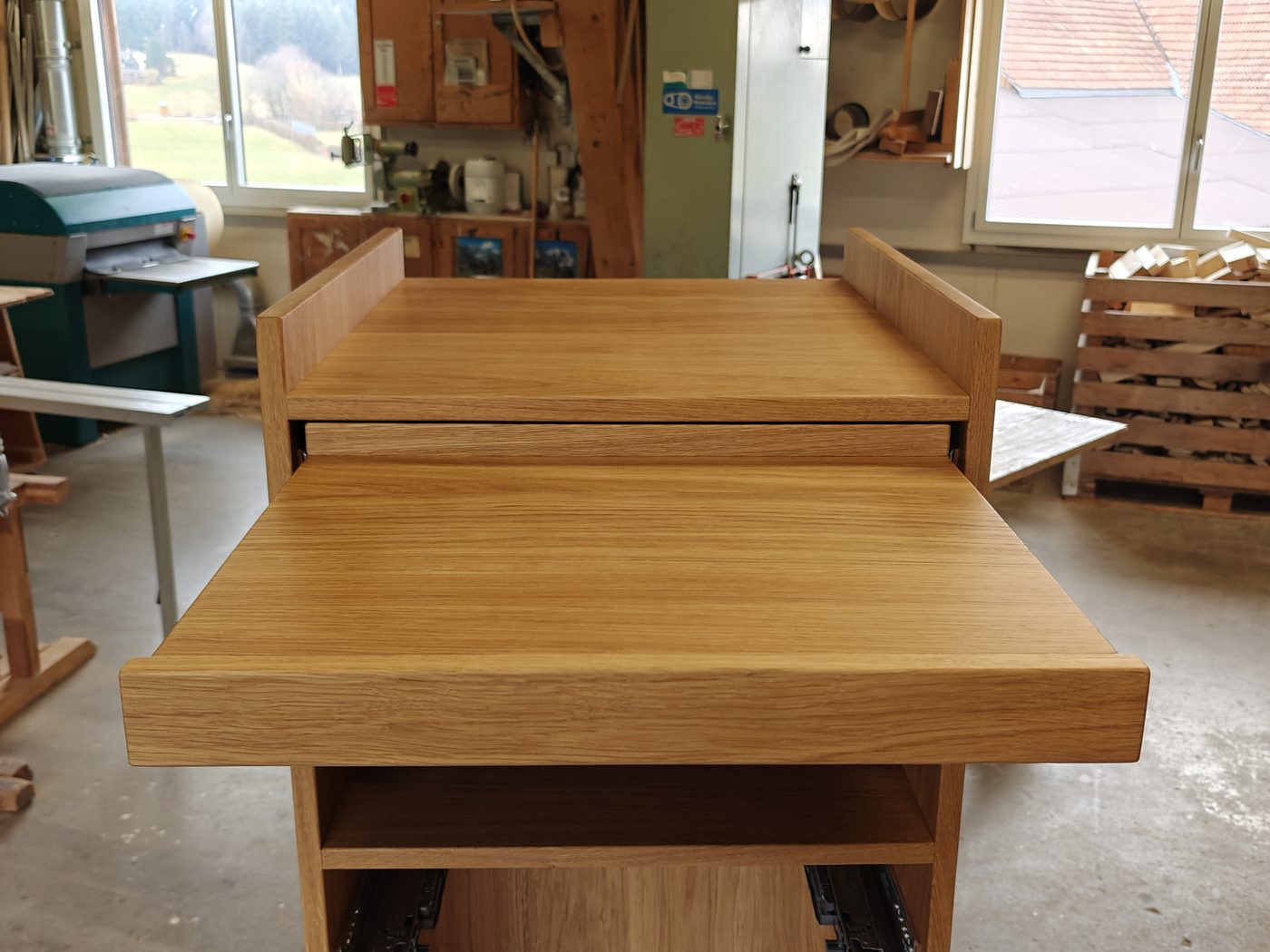
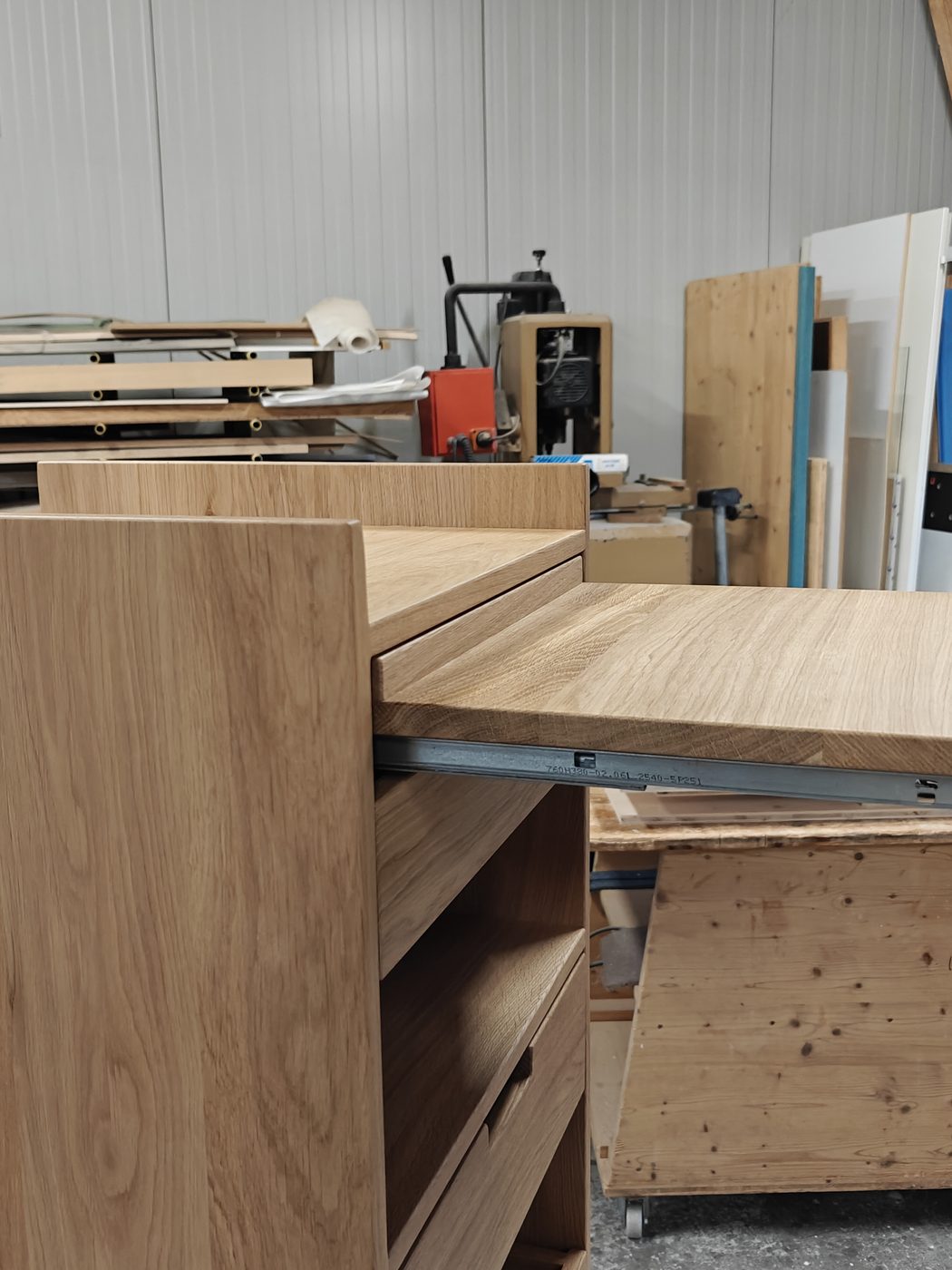
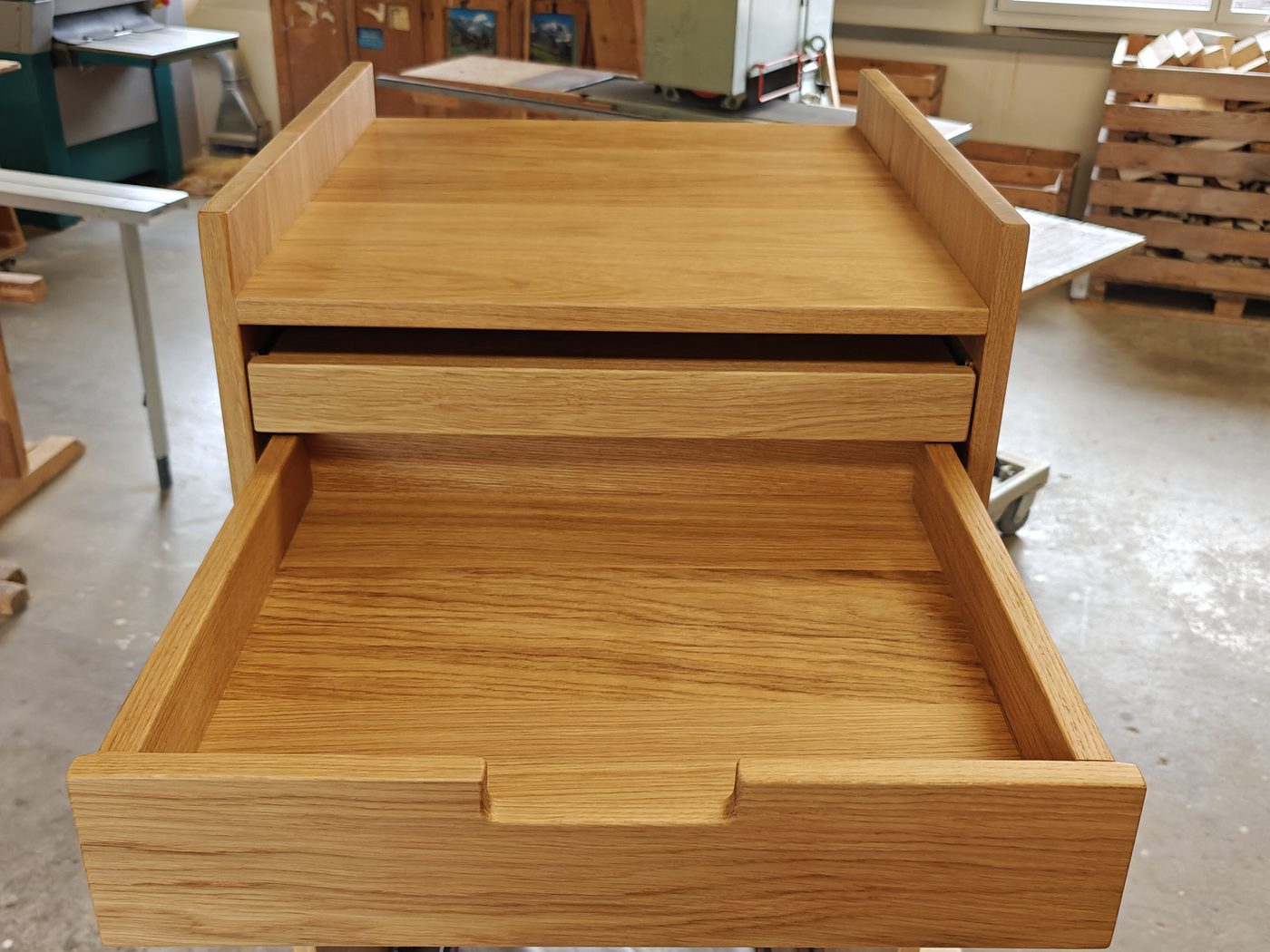
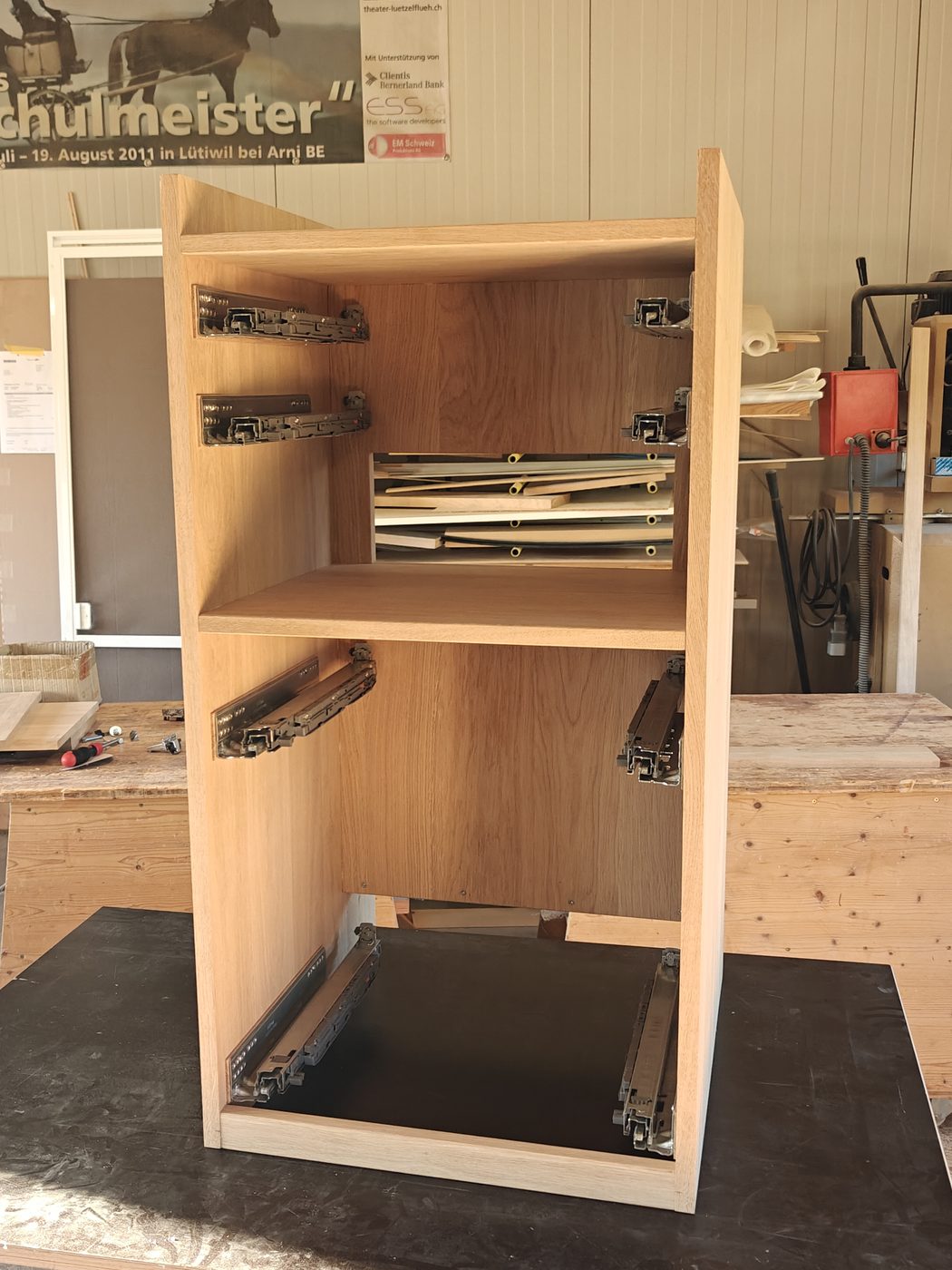
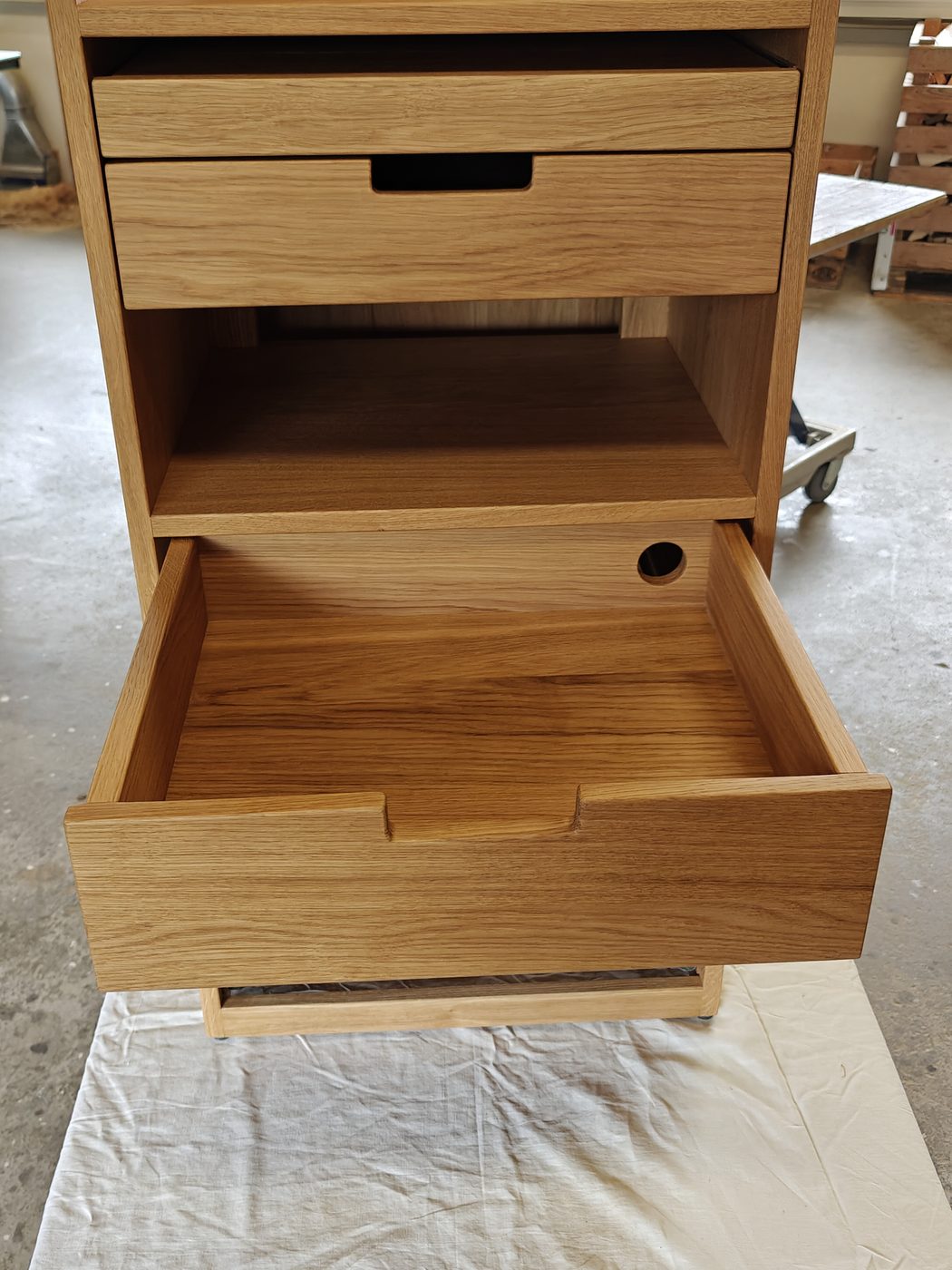
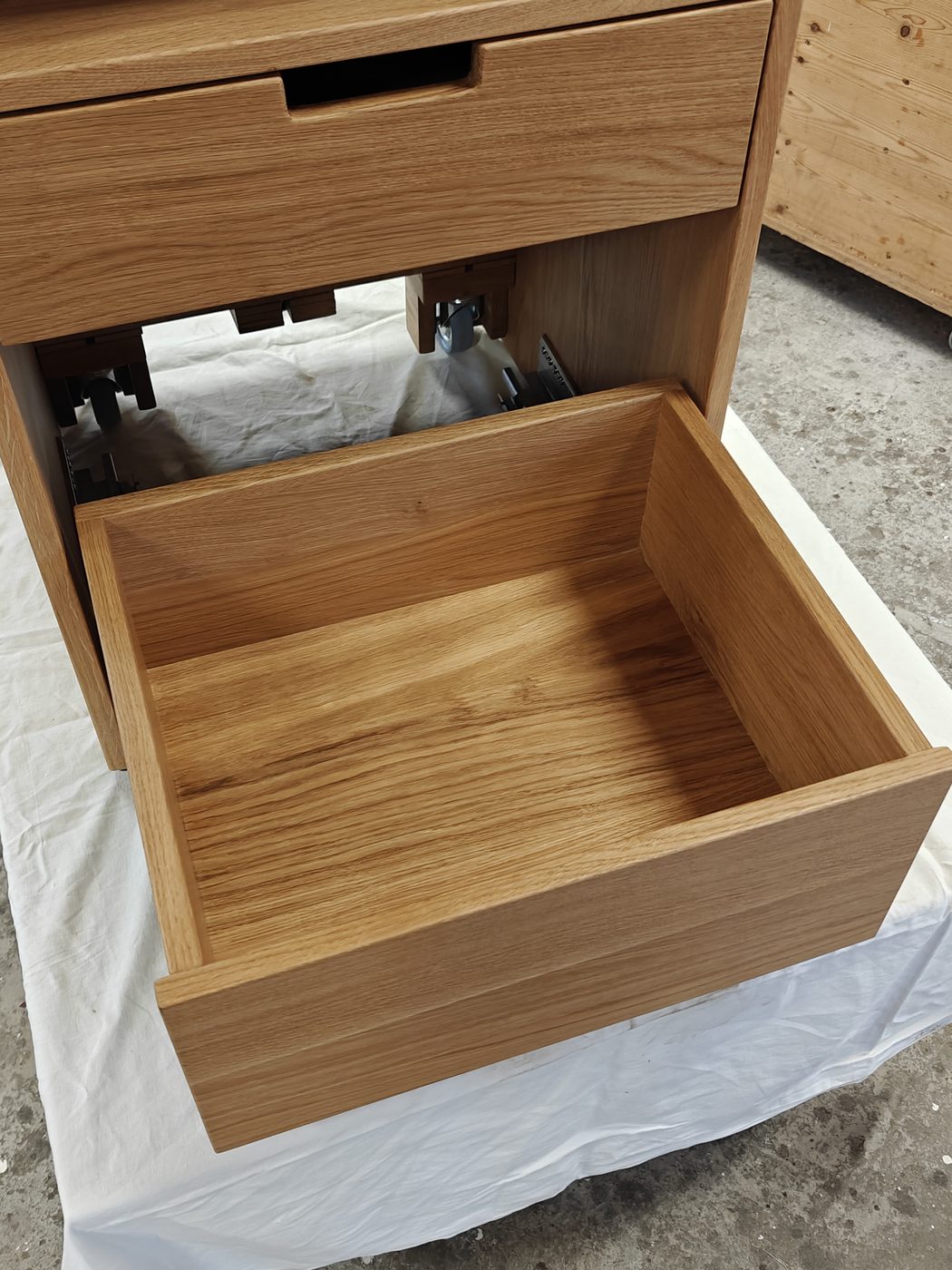
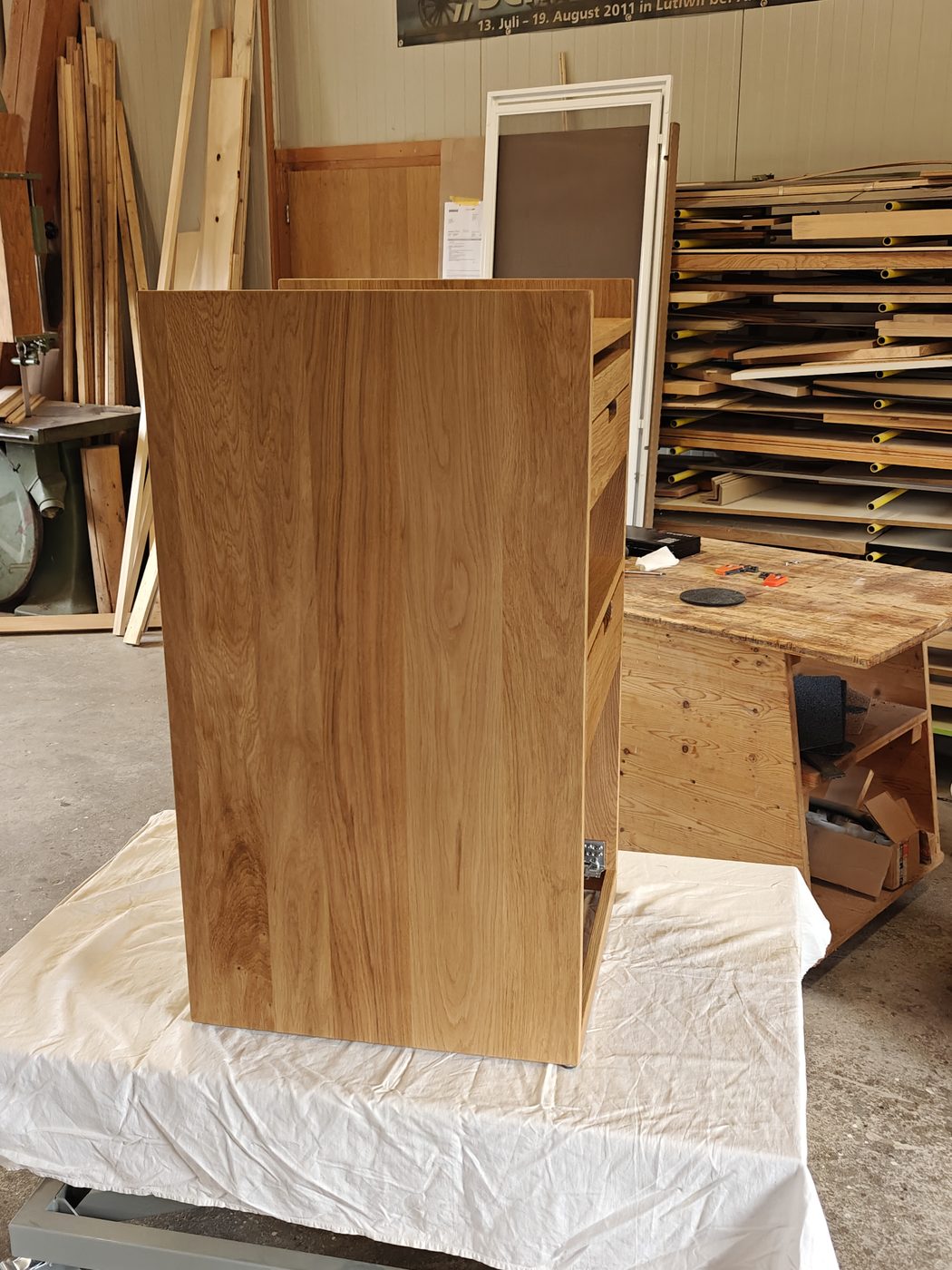 instead of protruding. His suggestion — and from that emerged the entire front symmetry of the final version. One drawer closed, receiver open, drawer closed, records open, shelf on top. Rhythm. Order. Without having to push the drawers in.
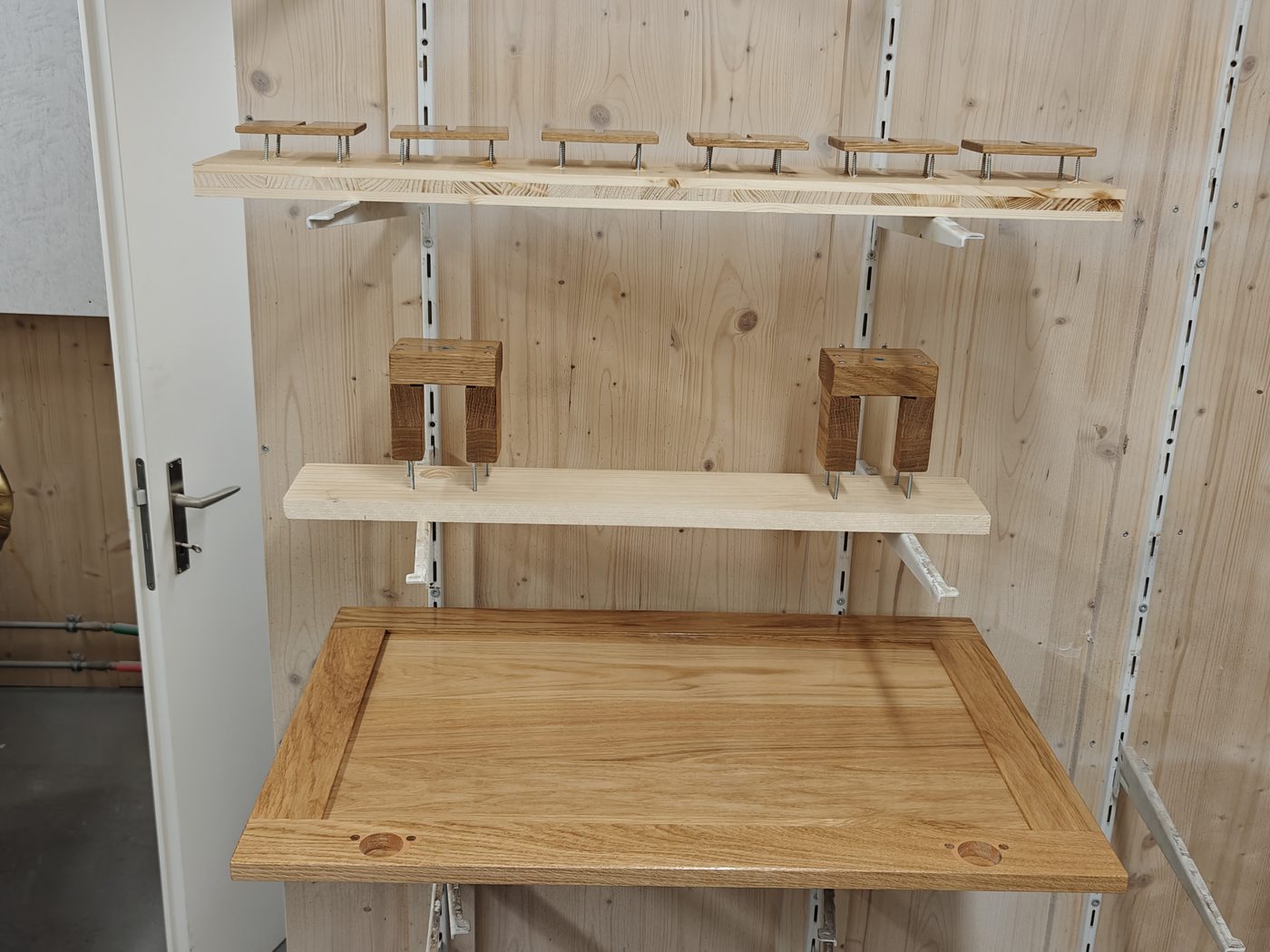 . I did the feet separately, then placed the piece on crates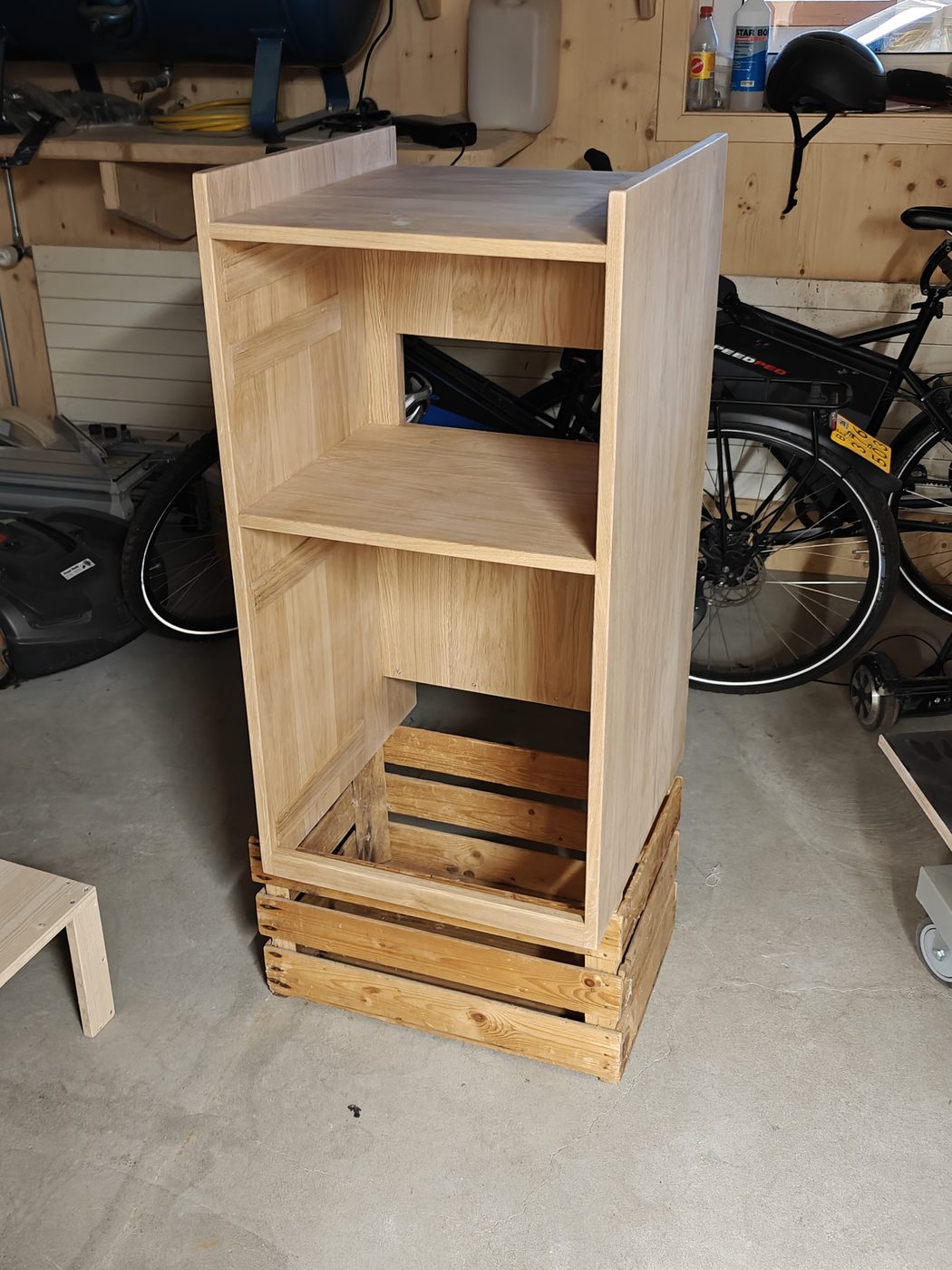
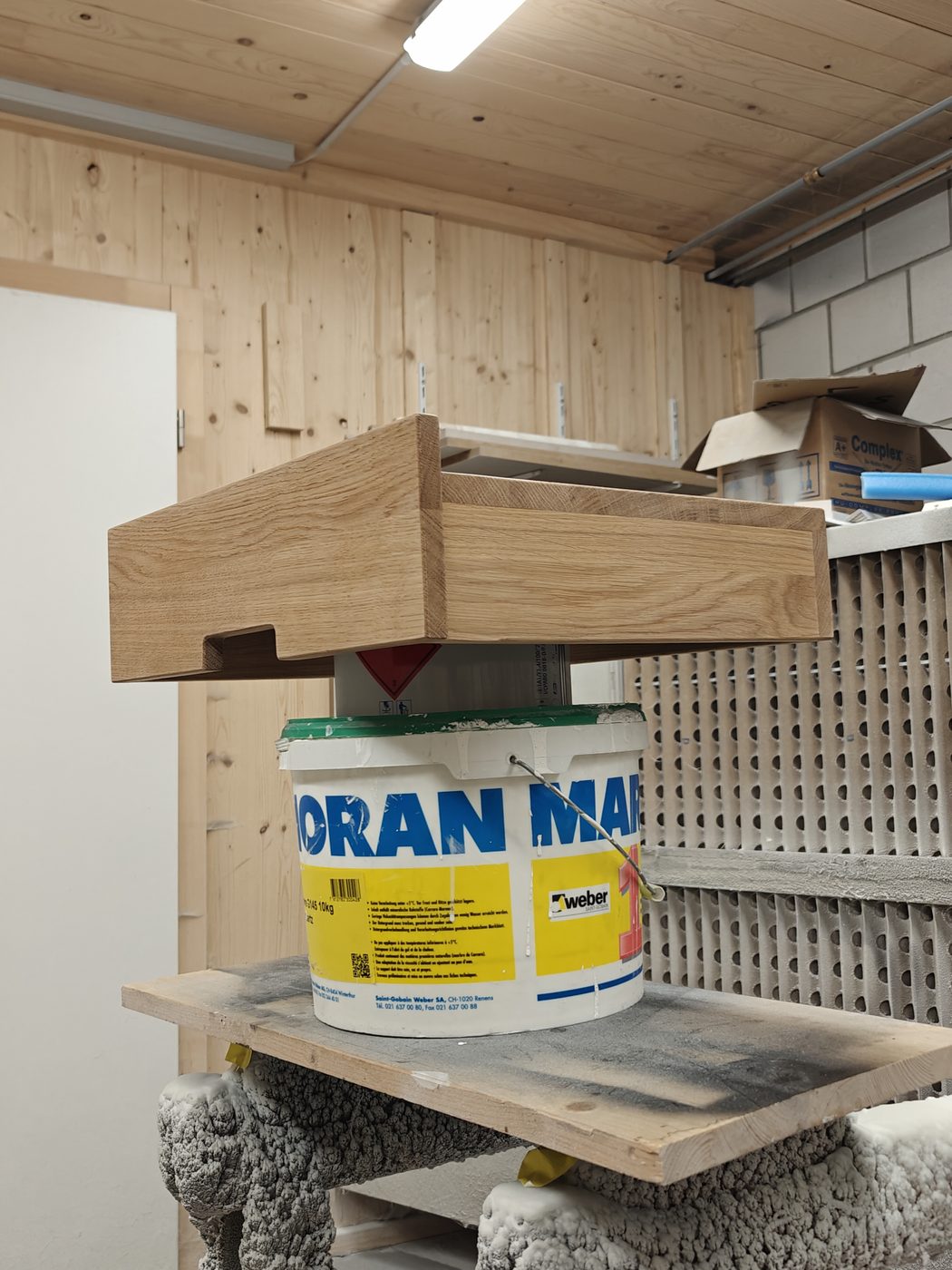 and sprayed everything in one go.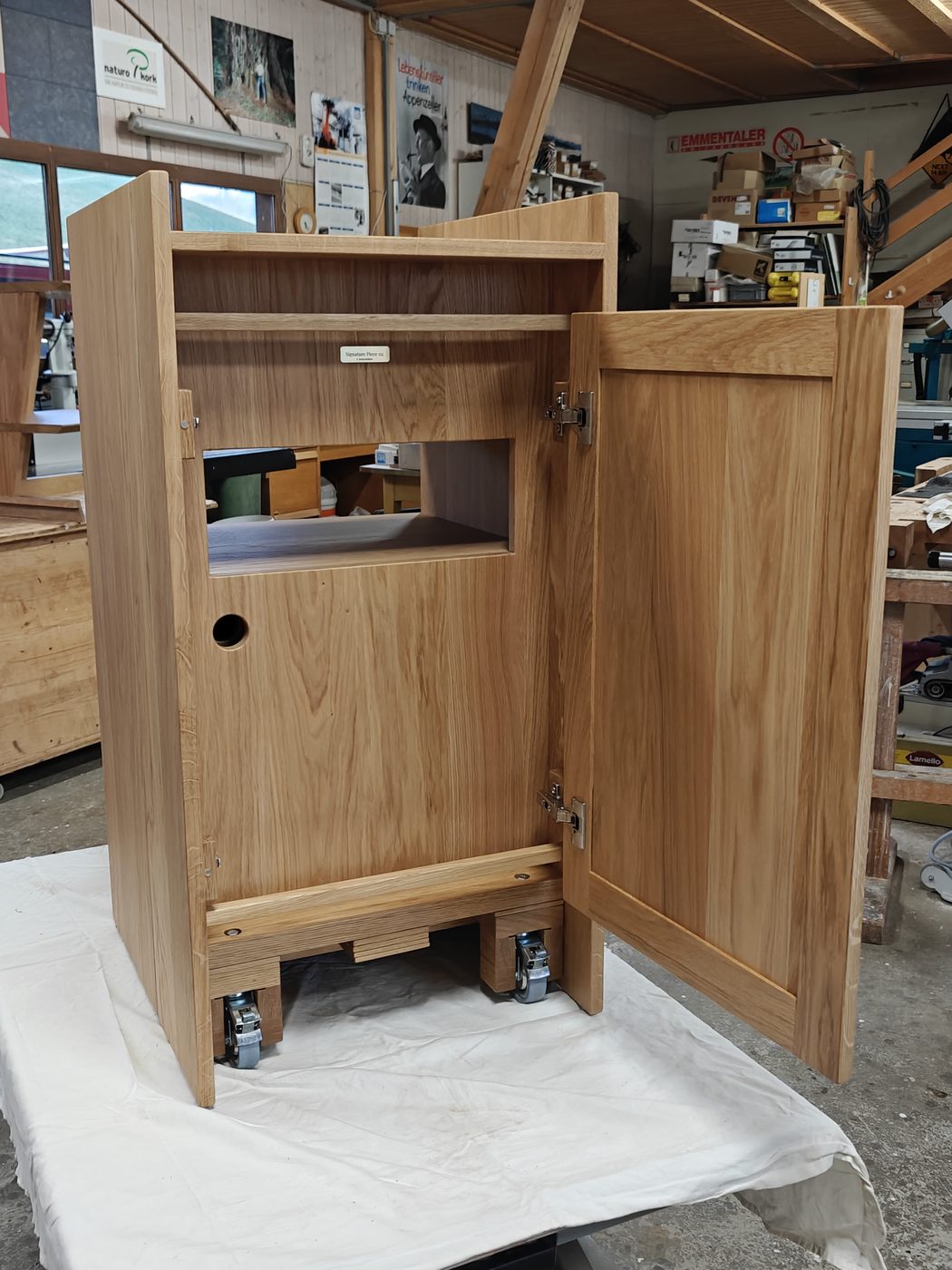
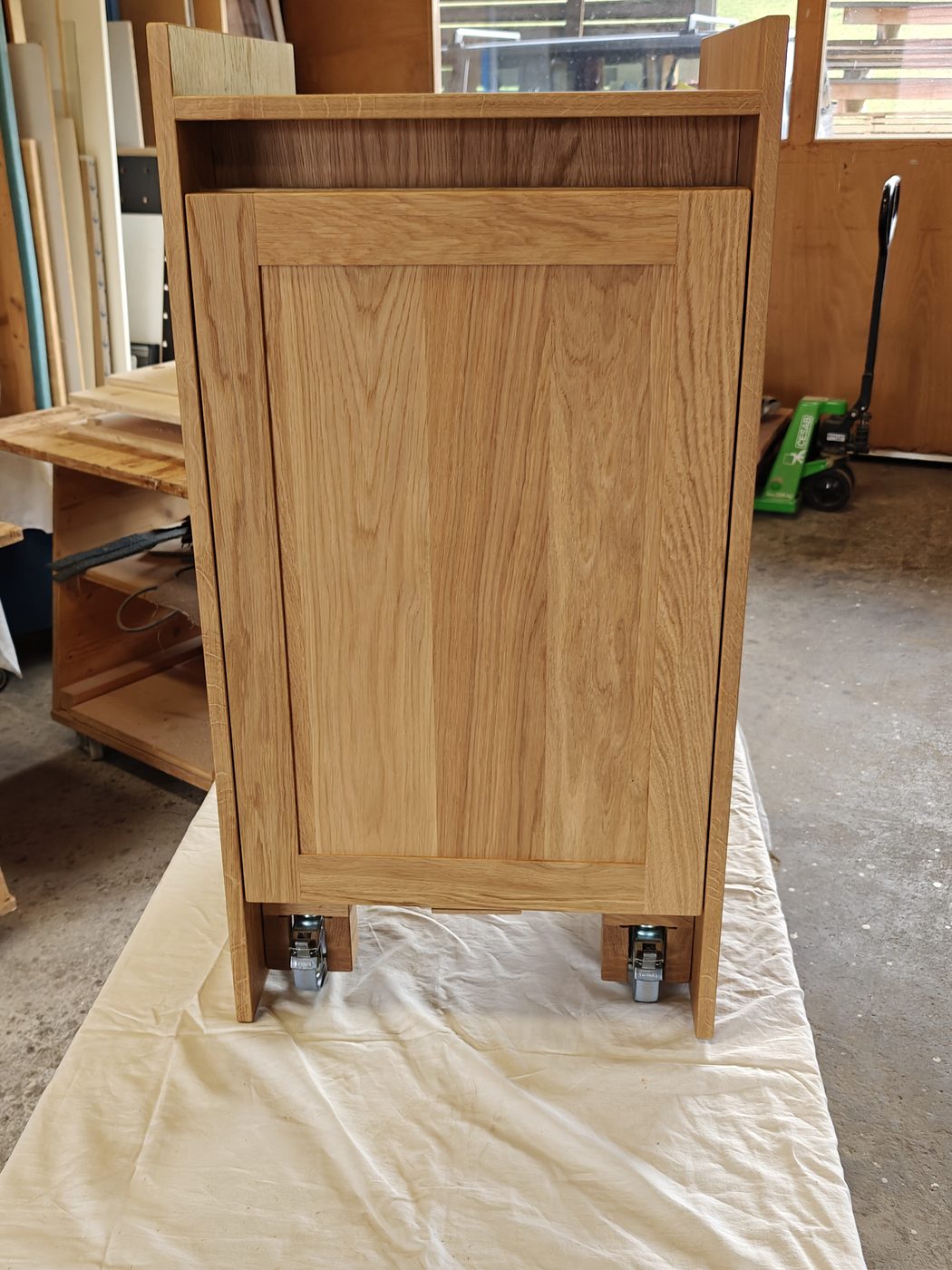 . Reversible — mountable left or right, 30 seconds to switch.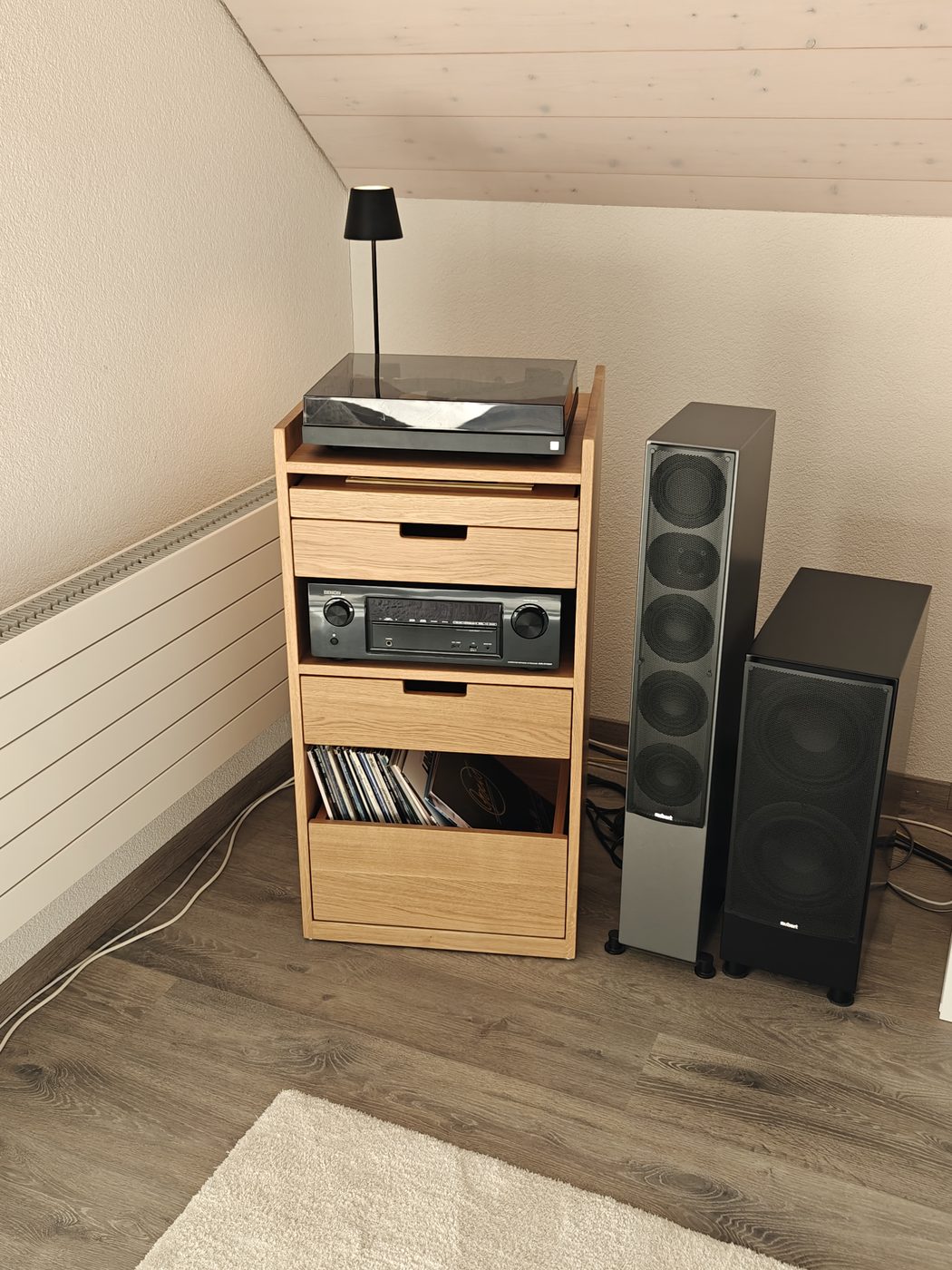
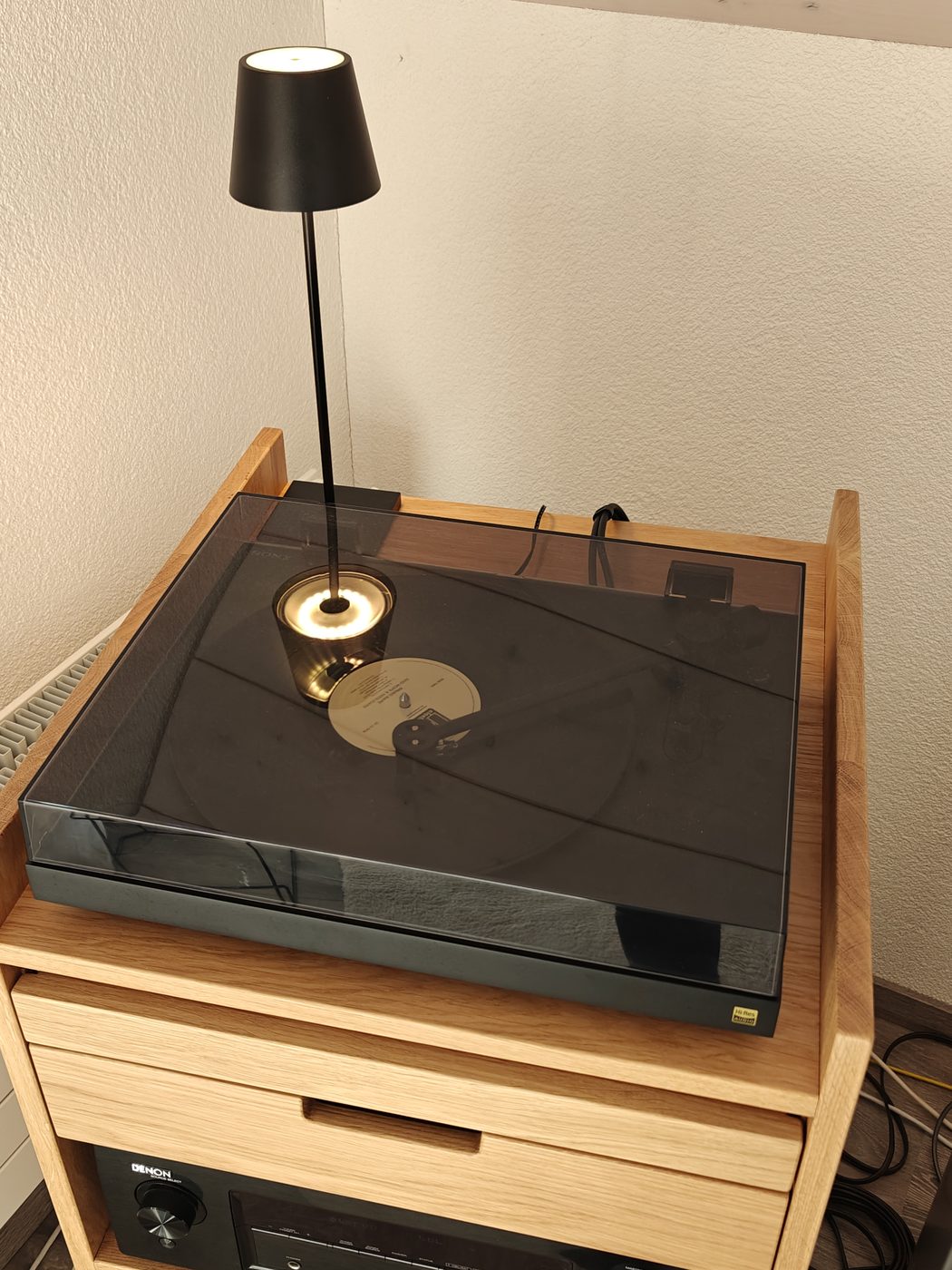 . Receiver in the middle. Records in the drawer
 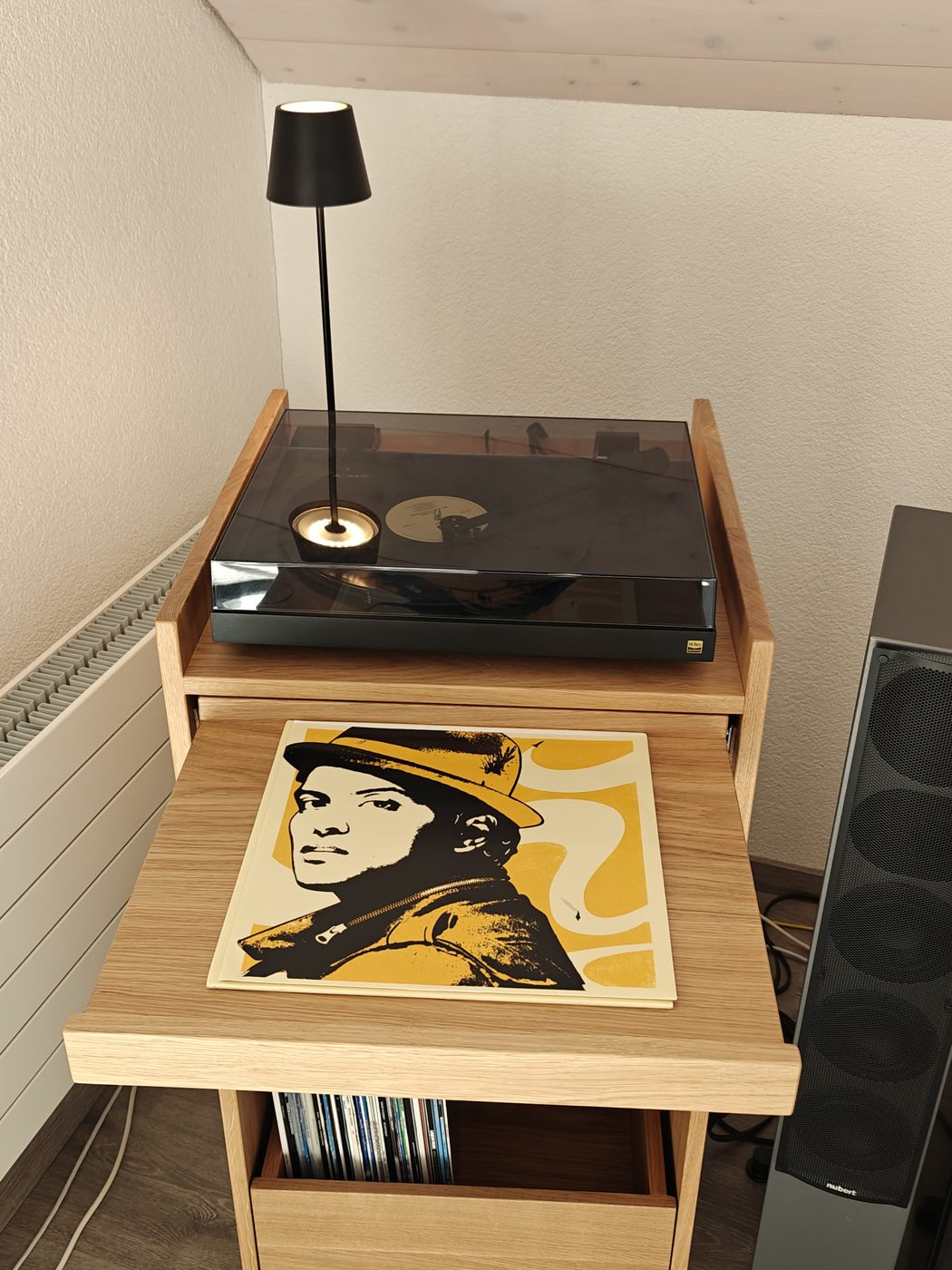 . Next to the floor-standing speakers, under the sloped ceiling.
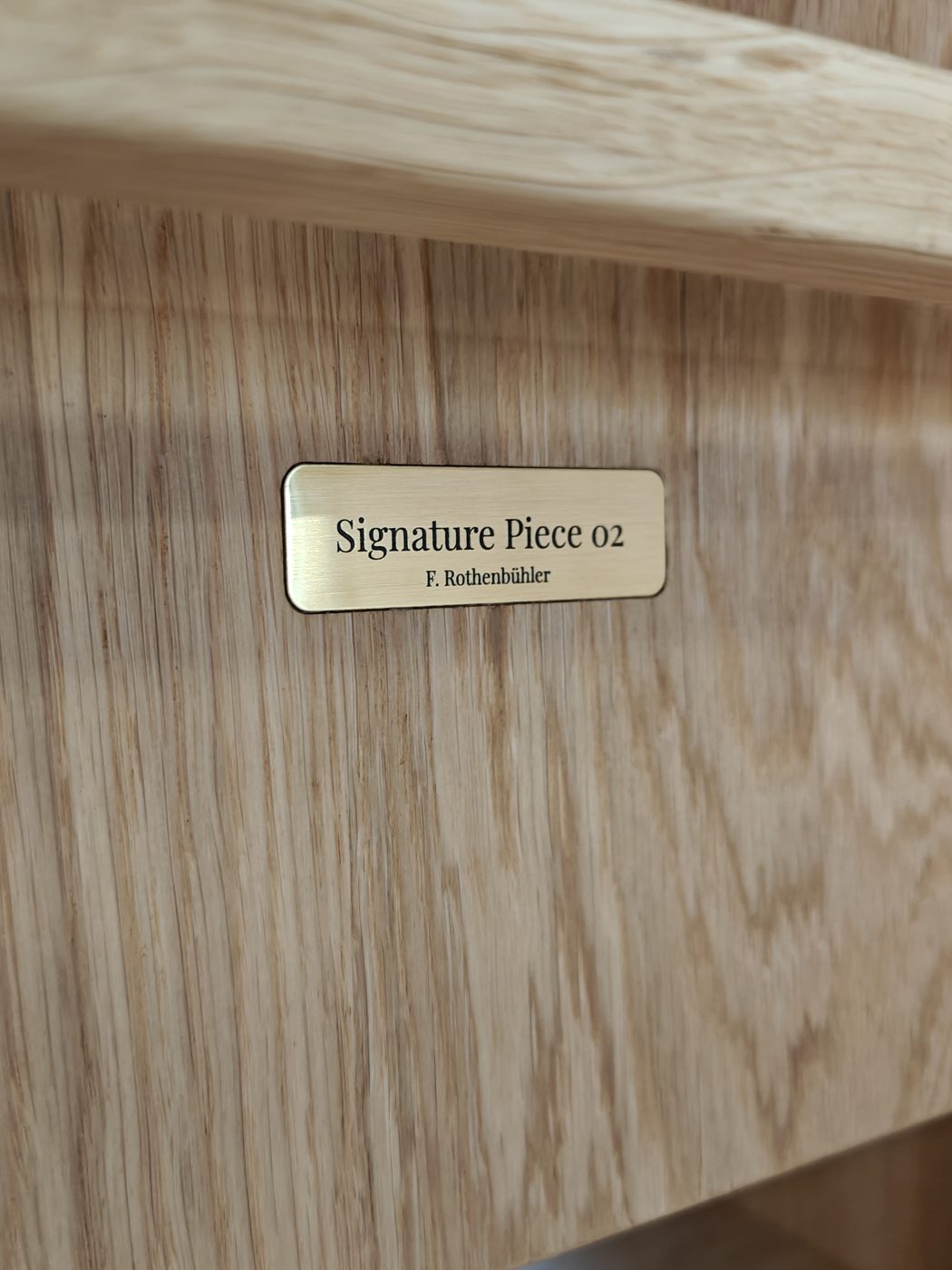 , numbered. Born from a conversation, six months of thinking, a prototype, honest feedback, and the commitment to build nothing that doesn't feel right.